
Avalanche Safety Gear & Equipment
(97)












Avalanche Safety Gear: Survival in the Mountains
The winter has blanketed the mountain slopes with a thick layer of powder, just waiting for you to carve the first lines on your skis or snowboard. However, any outing in off-piste terrain carries risks, making it crucial to equip yourself with effective Avalanche Safety Gear & Equipment. This Avalanche Safety Gear & Equipment increases the chances of survival for victims caught in an avalanche and enhances your own survival chances in case of an accident.
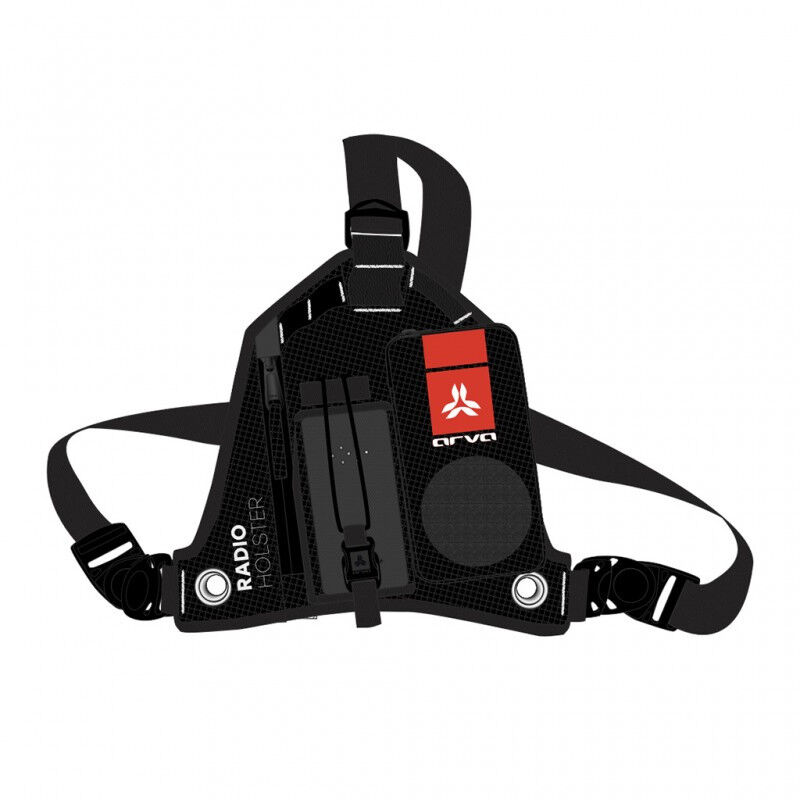
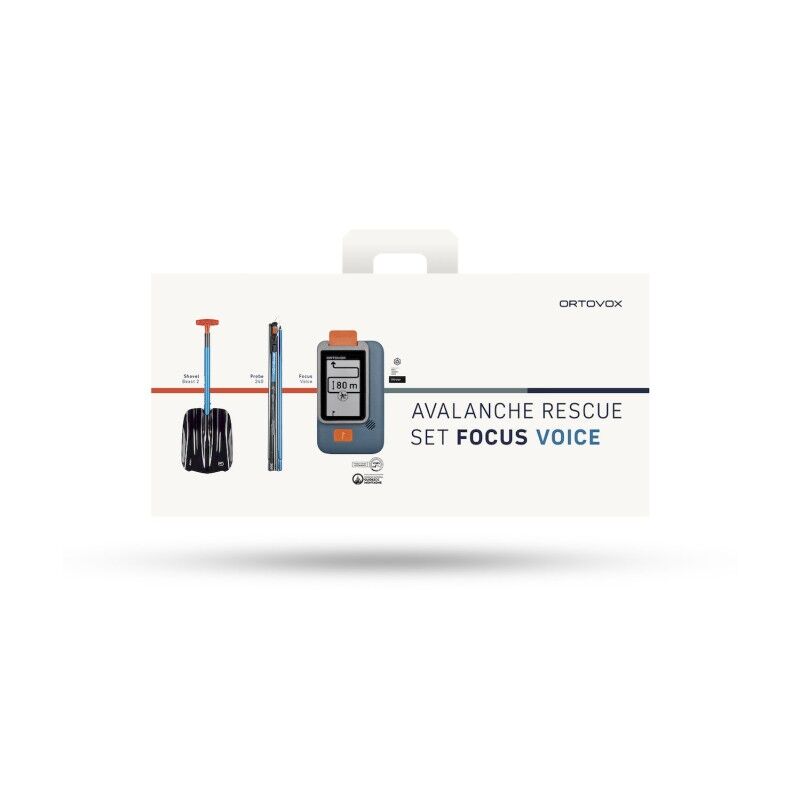
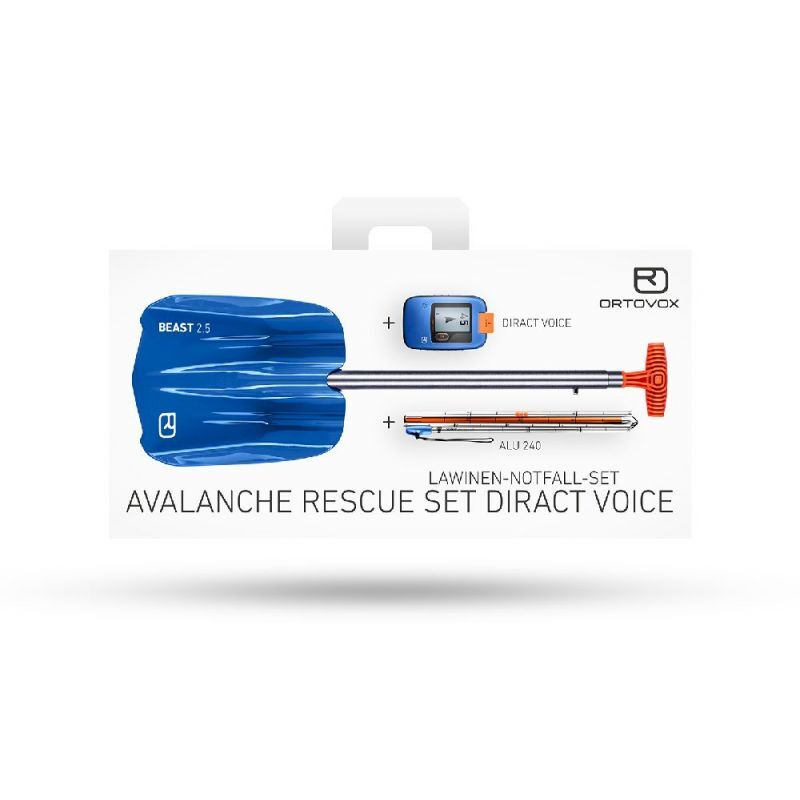
Indeed, avalanches are a real and frequent risk in the mountains. They can be triggered by the slightest movement of a skier and are often unpredictable, although avalanche risk assessments can provide insight into the quality of the snowpack before your off-piste outings. The quality of the snow will determine the likelihood of an avalanche occurring. A snowpack that is not yet stabilised at the beginning of winter or weakened by warming during the season and early spring presents an increased risk of snow slides. Triggered by the passage of a group of off-piste skiers or even without any passage, avalanche slabs can be powerful and devastating for anyone caught in the avalanche. The Avalanche Safety Gear & Equipment is designed to minimise fatal risks in case of an accident in the high powder. This Avalanche Safety Gear & Equipment allows you to effectively locate and rescue avalanche victims, and to be found and extracted from the avalanche snow layer if you are caught. To achieve this, Avalanche Safety Gear consists of various avalanche safety equipment, namely: the DVA, the avalanche shovel, the avalanche probe, and the airbag pack. All this Avalanche Safety Gear & Equipment performs effectively and safely when used together. Indeed, the trio DVA - shovel - probe constitutes the basic Avalanche Safety Gear & Equipment, enabling you to respond to an avalanche situation that may have swept away one of your freerider group members. This basic Avalanche Safety Gear & Equipment allows you to quickly locate the position of the swept-away and buried skier(s), then to dig them out to administer first aid. This Avalanche Safety Gear & Equipment must always be carried together, as they work in complementarity. Incomplete Avalanche Safety Gear & Equipment, such as missing a probe or shovel, would hinder your ability to act correctly and quickly to locate a buried avalanche victim. Indeed, the DVA is the safety equipment that allows you to precisely locate the position of the buried victim in the avalanche, so you can position yourself directly above them. Once you have identified this position beneath the snow layer with the effective and efficient Avalanche Safety Gear & Equipment that is the DVA, you need to physically confirm the exact presence of this victim with the avalanche probe. For this, probing the restricted area you have defined using the DVA must be done quickly to ensure definitively that the buried skier is indeed there, beneath your feet. The probe is an Avalanche Safety Gear & Equipment that also serves as a marker for digging with the avalanche shovel, which constitutes the last phase before being able to administer first aid to the victim.
The mountain environment is hostile and dangerous, and Avalanche Safety Gear & Equipment helps you save time in avalanche victim searches. Indeed, the chances of survival for a buried victim are estimated at 91% after 18 minutes of burial, dropping to 34% after 35 minutes, and to 30% after 60 minutes. The use of Avalanche Safety Gear & Equipment is designed to help you reduce this burial time for the victim, making it crucial. Moreover, multi-victim avalanches can also be frequent. Although avalanches involving a single victim are the most common (78% of total avalanches), avalanches with 2 victims (13%), 3 victims (7%), and 4 or more victims (2%) are much more devastating and deadly. Indeed, even if the non-buried skiers in the group are equipped with complete and effective Avalanche Safety Gear & Equipment, these multi-victim avalanches require an organised search effort that can be difficult to implement in the stress and uncertainty of an avalanche. The basic parameters of the situation are often unknown: how many skiers have been swept away, who the swept-away skiers are, where the skiers capable of rescuing others are located... In this regard, Avalanche Safety Gear & Equipment must equip every skier in your group, so that everyone can assist in locating and searching for avalanche victims. Every off-piste skier must be equipped with complete Avalanche Safety Gear & Equipment, once again consisting of a DVA, a shovel, and a probe. Indeed, time is of the essence, and complete Avalanche Safety Gear & Equipment helps you reduce this extraction time, directly correlating to increased survival chances for the victims. Thus, extraction times with complete or incomplete Avalanche Safety Gear & Equipment vary greatly, estimated at 11 minutes with the DVA - Shovel - Probe trio, 25 minutes without an avalanche probe, and 60 minutes with only a DVA. These figures highlight the importance of using this Avalanche Safety Gear & Equipment together.
Avalanche Safety Gear: The DVA
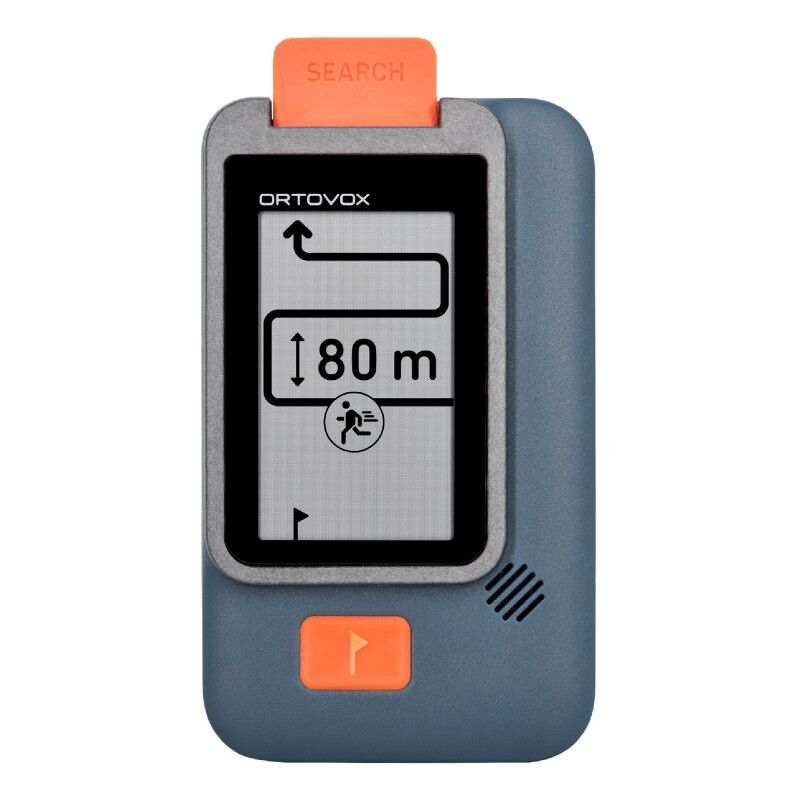
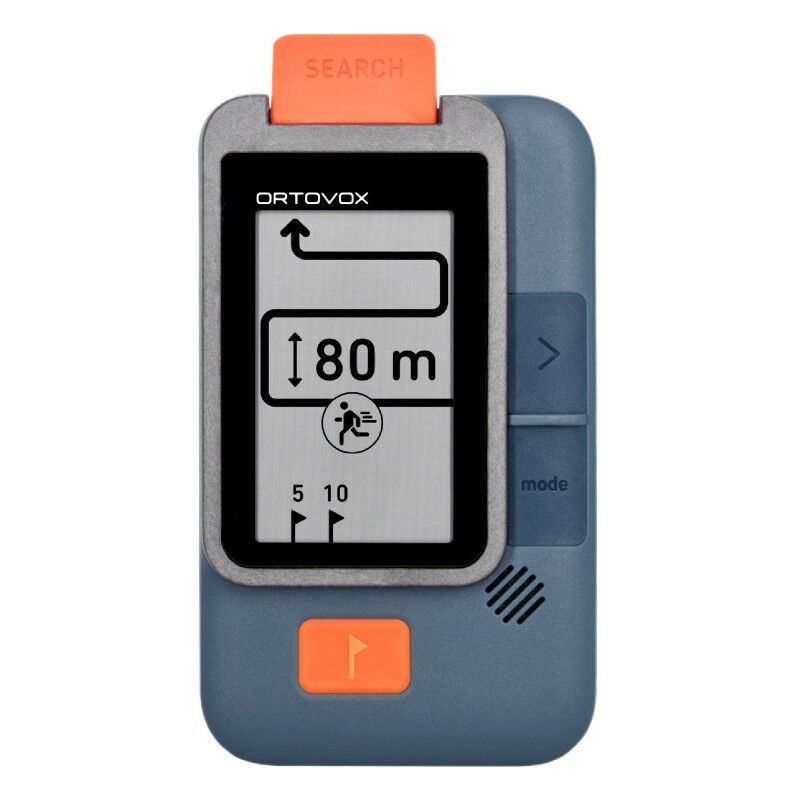
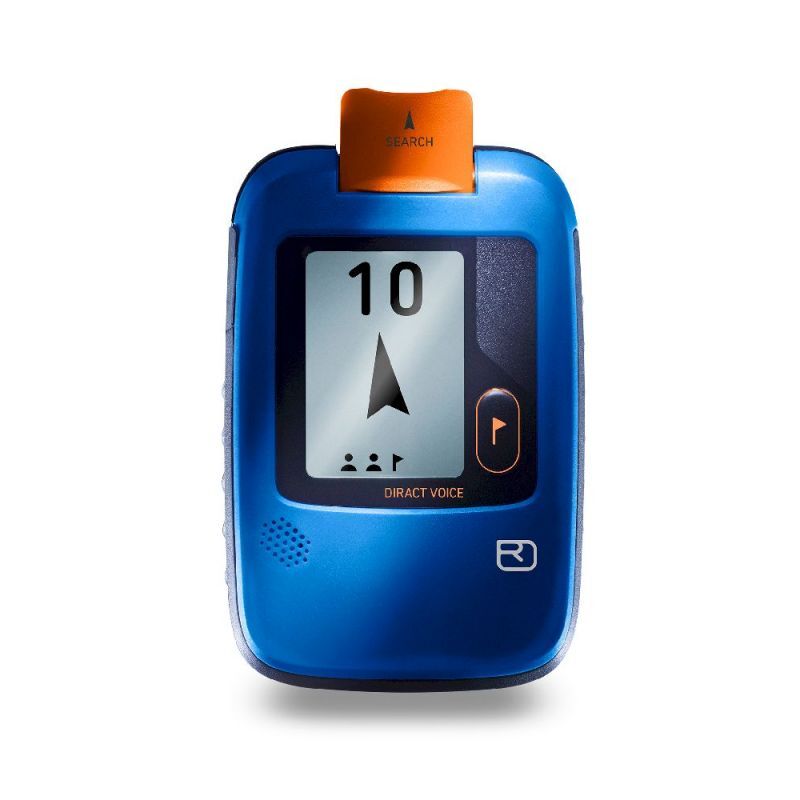
The DVA (Avalanche Victim Detector) is a transmitter-receiver beacon that locates other DVAs present in the same area. This basic Avalanche Safety Gear & Equipment, invented in the 1980s, allows you to find avalanche victims who have been swept away and buried by the avalanche. Operating in both transmission and reception modes, this Avalanche Safety Gear & Equipment is user-friendly and captures signals from other beacons emitting in the avalanche zone. A DVA thus converts this signal into visual and auditory information, guiding you towards the burial position of the victim(s). This advanced Avalanche Safety Gear & Equipment can feature sophisticated functionalities and is used by both amateur freeriders and professional rescuers, as well as seasoned rescuers trained in mountain search. Allowing for individual victim location, this complete Avalanche Safety Gear & Equipment facilitates searches in multi-victim avalanches and aids in organisation. One of the basic characteristics of a DVA is the search bandwidth, which corresponds to the listening range of your DVA, allowing you to scan a wider or narrower avalanche area to find the first signal from the DVA equipping the buried victim. Additionally, external conditions such as poor visibility due to snowfall, fog, or overcast weather can add to the difficulty of an avalanche situation. In this case, you may have no visual information available, which is why you need to equip yourself with suitable Avalanche Safety Gear & Equipment, such as a DVA with a sufficiently wide search bandwidth. However, a DVA may have features and options that are too advanced for a beginner or even a regular skier, so it is important to choose this Avalanche Safety Gear & Equipment based on your level of practice, frequency of off-piste outings, and knowledge of mountain search techniques.
Avalanche Safety Gear: The Avalanche Probe
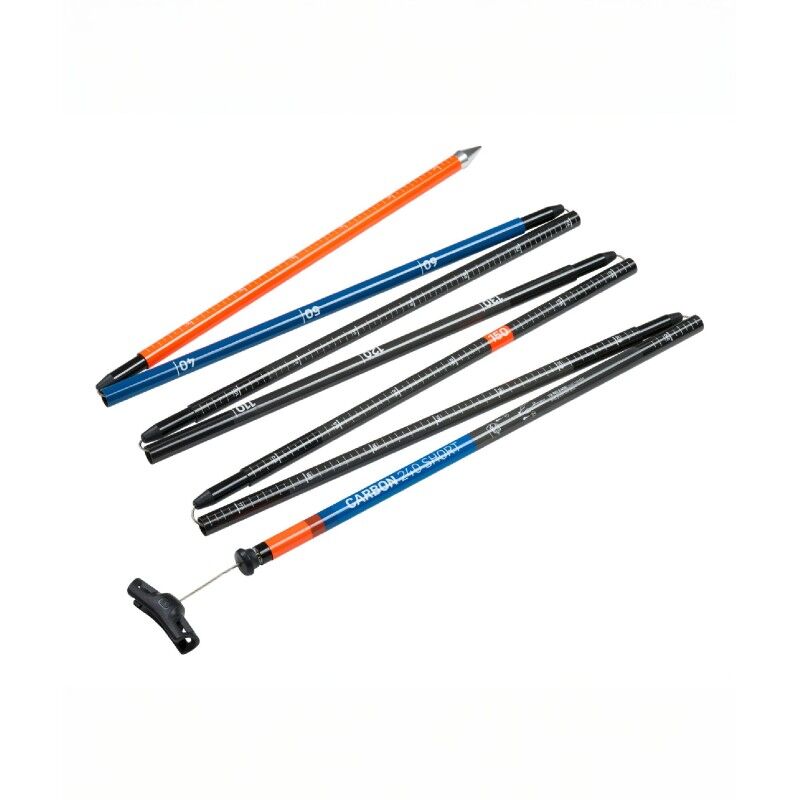
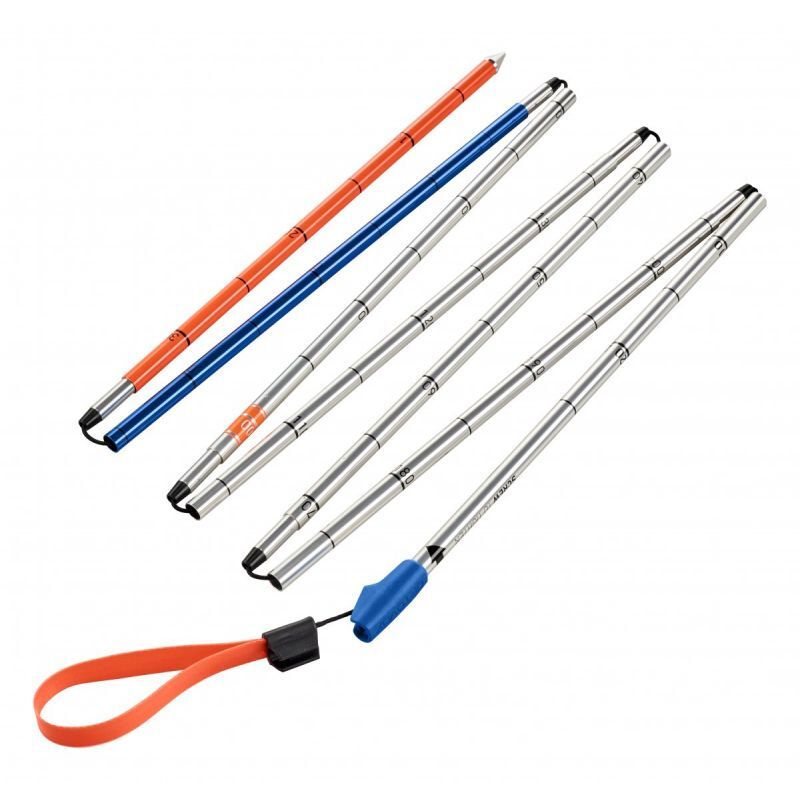
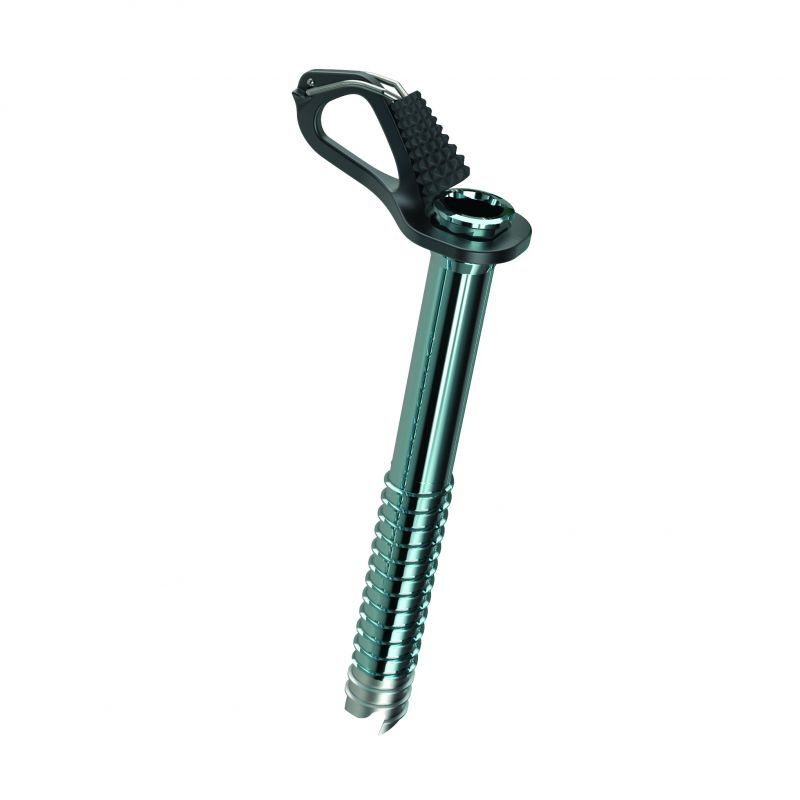
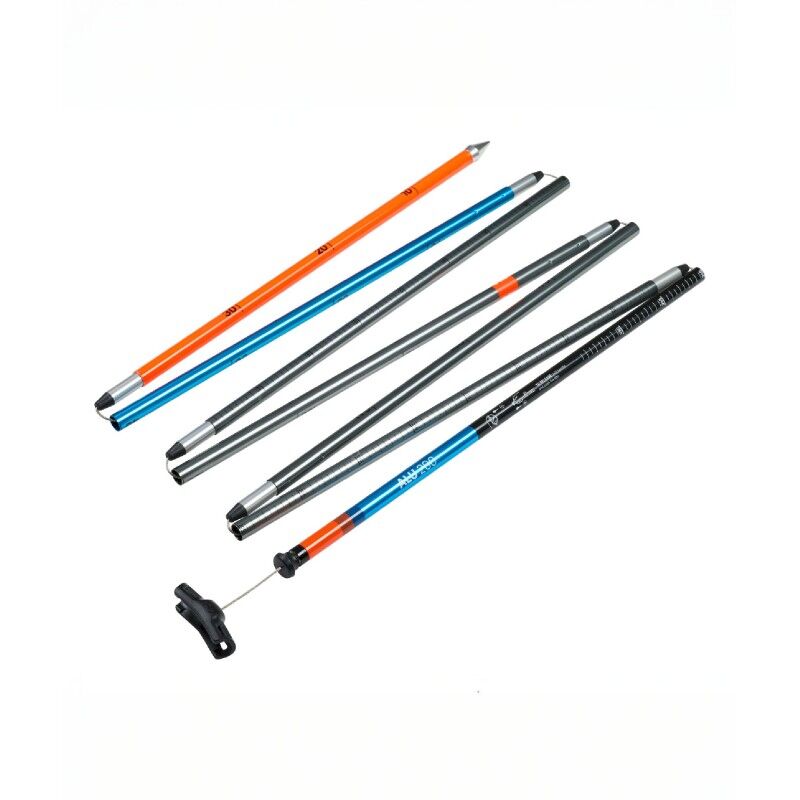
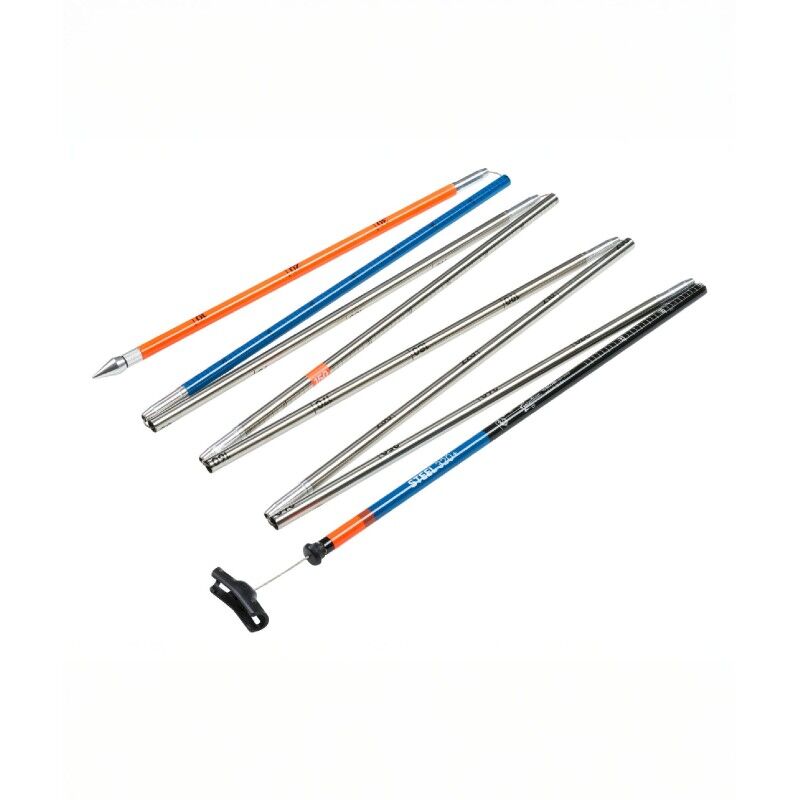
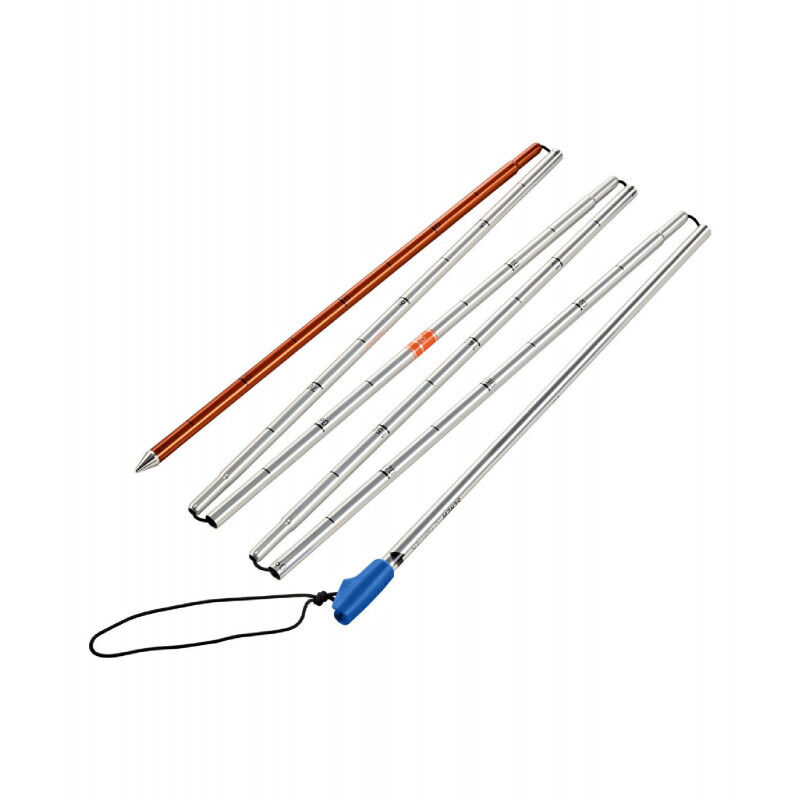
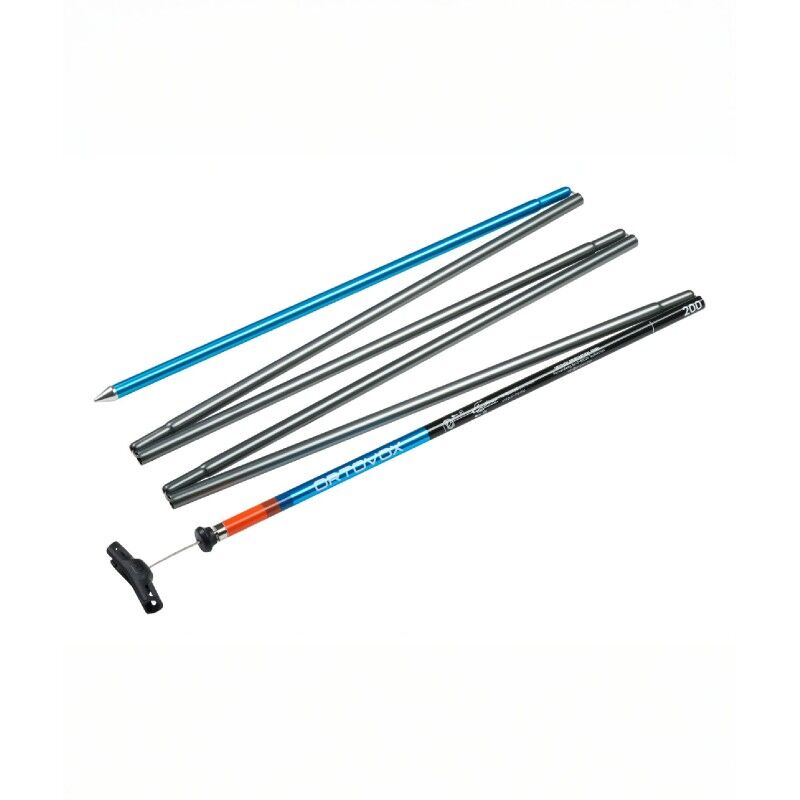
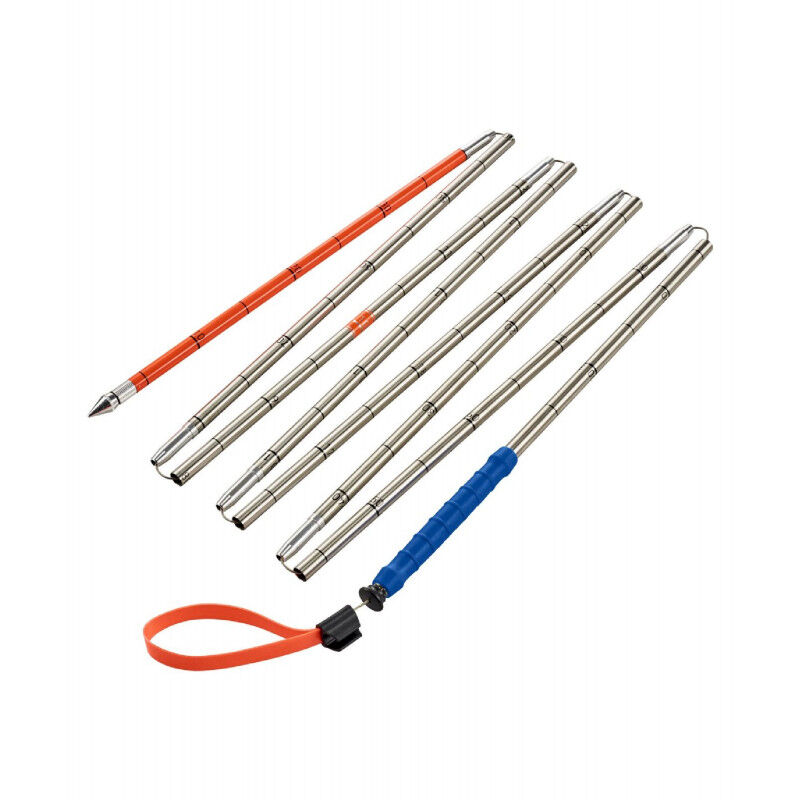
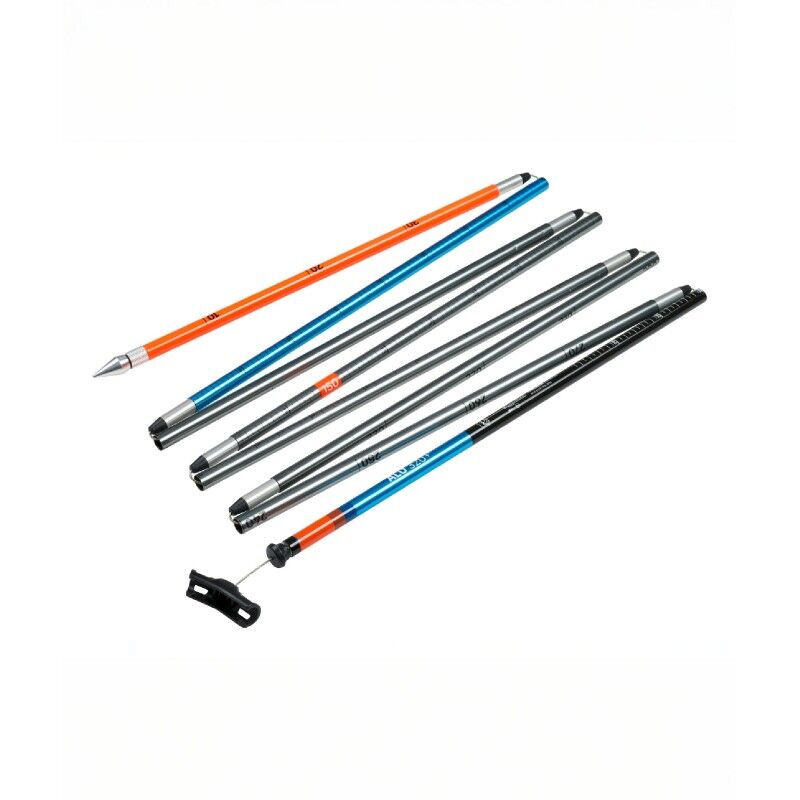
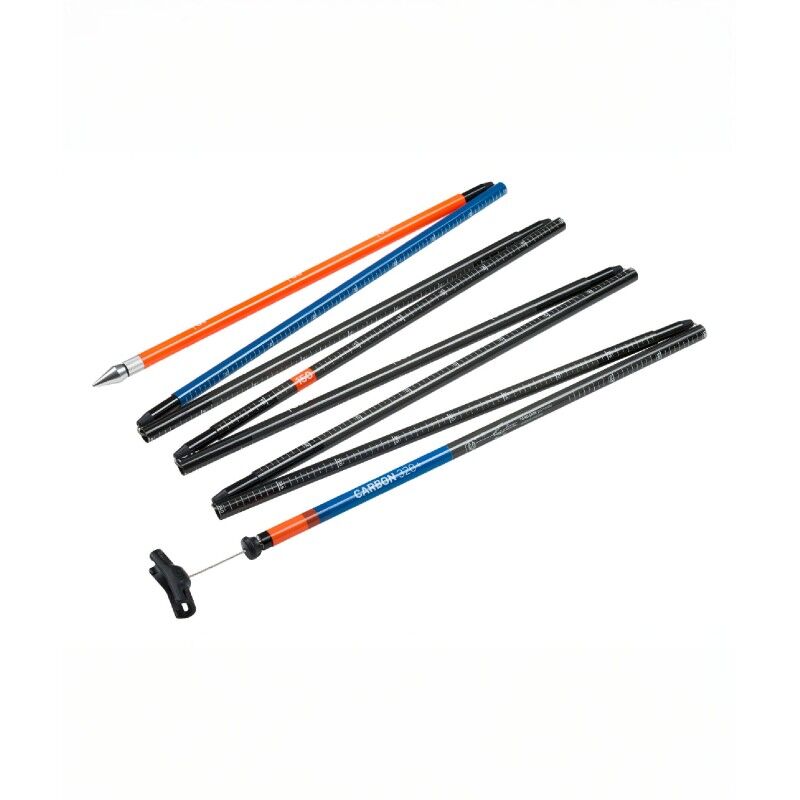
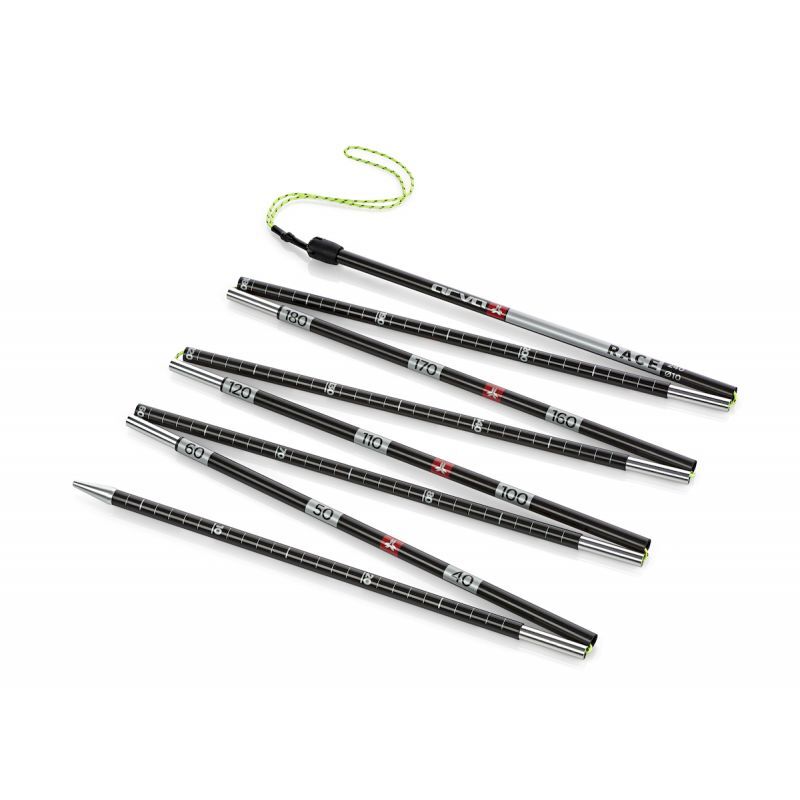
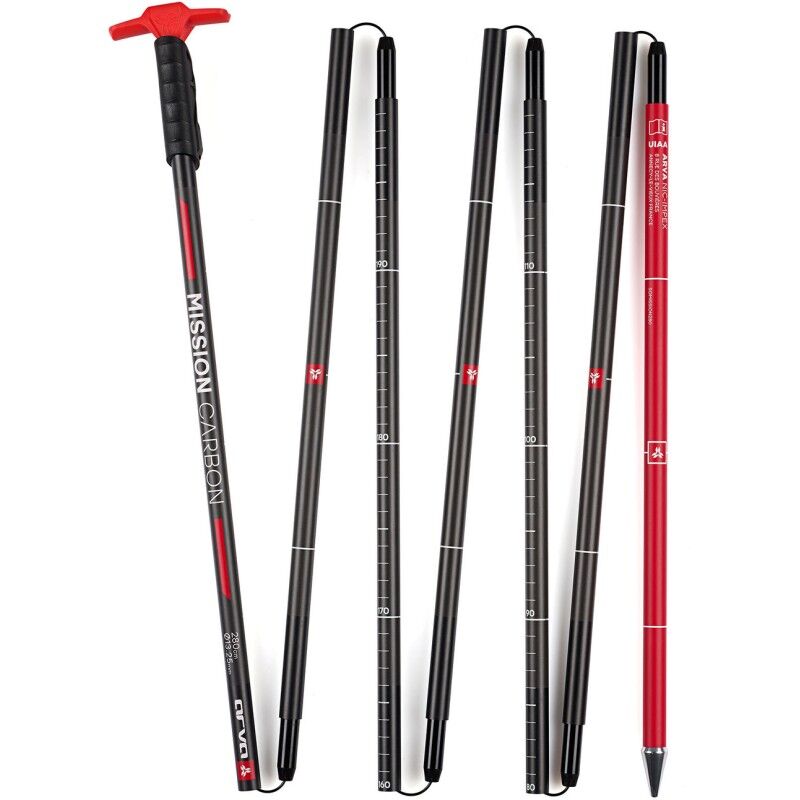
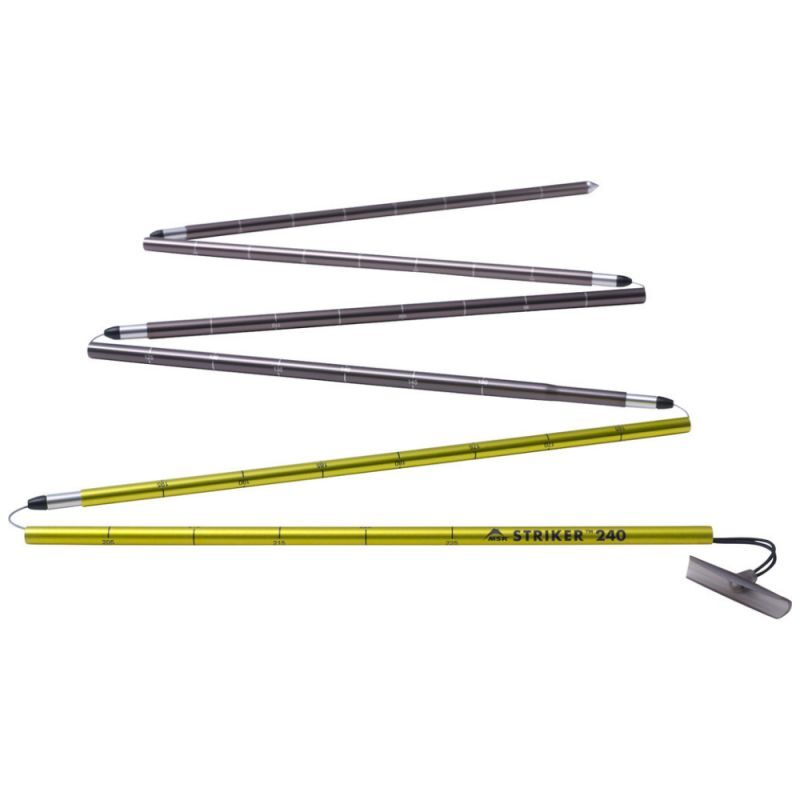
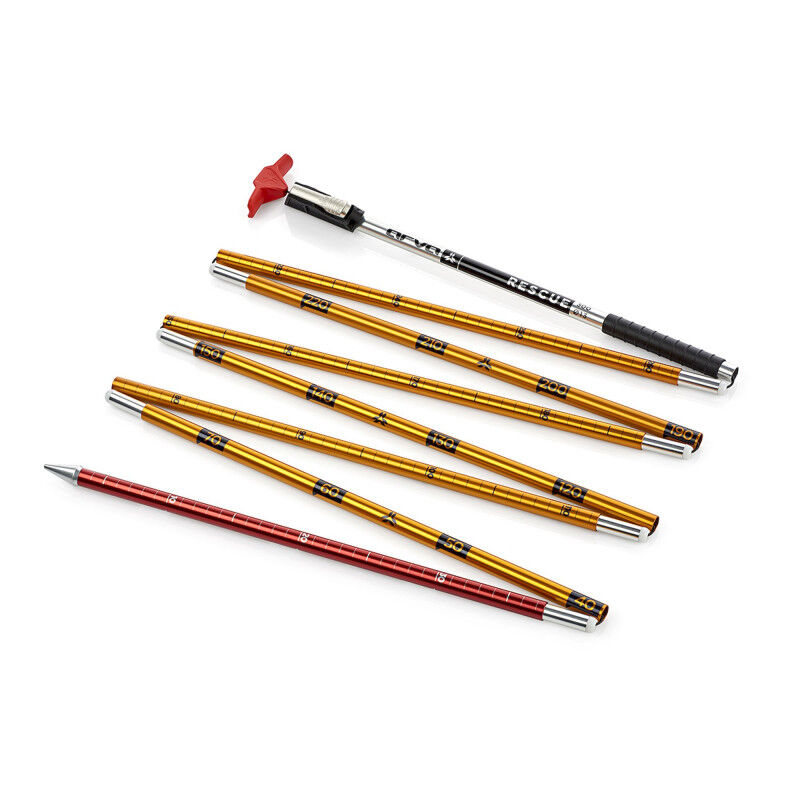
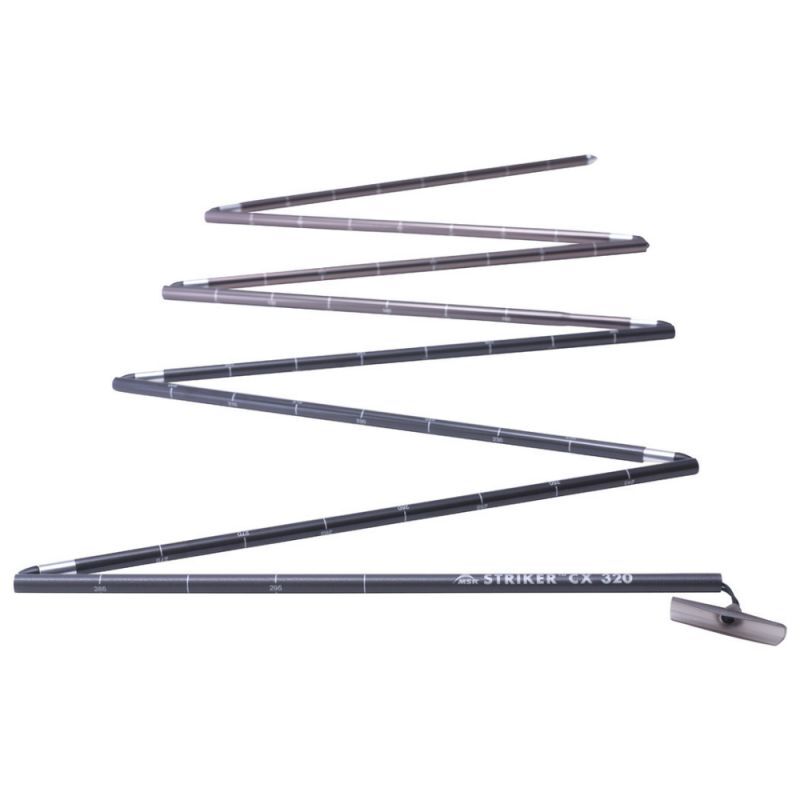
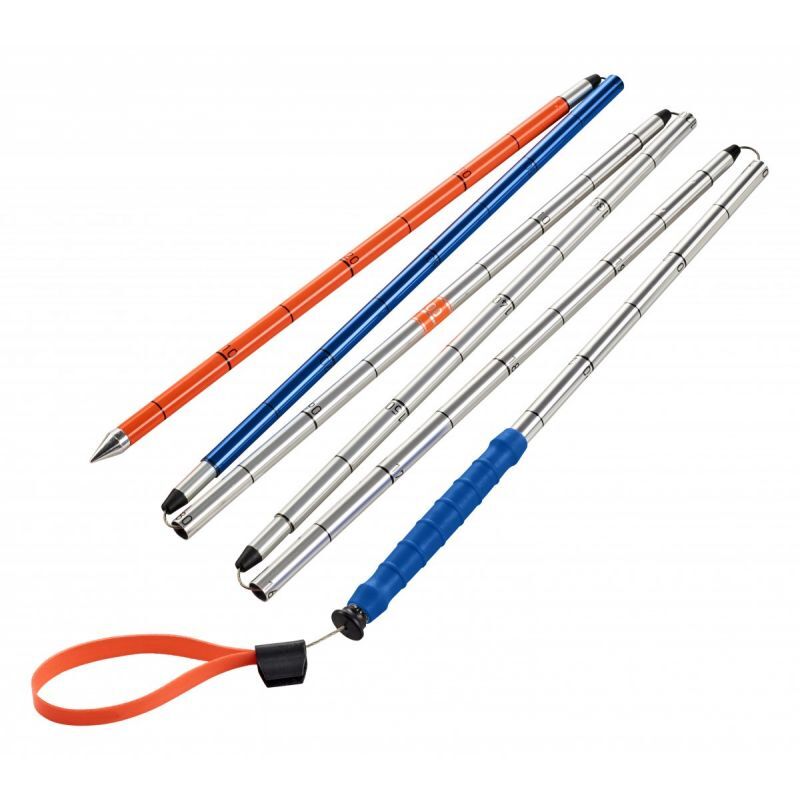
Once you have located the buried victim under the layer of avalanche snow, and determined a restricted perimeter of a few decimetres (defined by the lowest number reached with the DVA), you need to probe this space with the essential Avalanche Safety Gear that is the avalanche probe. This manoeuvre aims to confirm the presence of the victim by touching them with the probe, ensuring that the signal found by your DVA corresponds to the victim and not just the DVA itself, which may have detached due to the force of the avalanche. The avalanche snow layer being hard and sometimes very deep, your Avalanche Safety Gear that is the probe must be made of very rigid and durable material, while being lightweight and easy to deploy. The minimum length for this type of Avalanche Safety Gear is 240 cm, as most avalanche burials occur at 240 cm or less. The probe is therefore an indispensable and irreplaceable Avalanche Safety Gear. You cannot compromise on this Avalanche Safety Gear, otherwise, you would waste precious time in accurately locating the victim, digging in an imprecise area and possibly next to the actual location of the buried skier.
Avalanche Safety Gear: The Avalanche Shovel
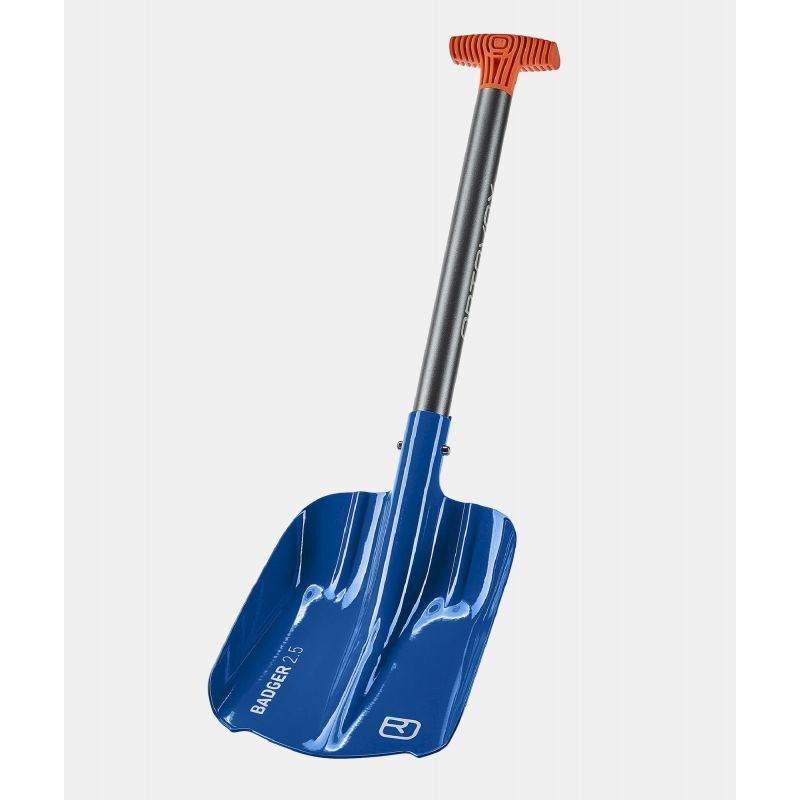
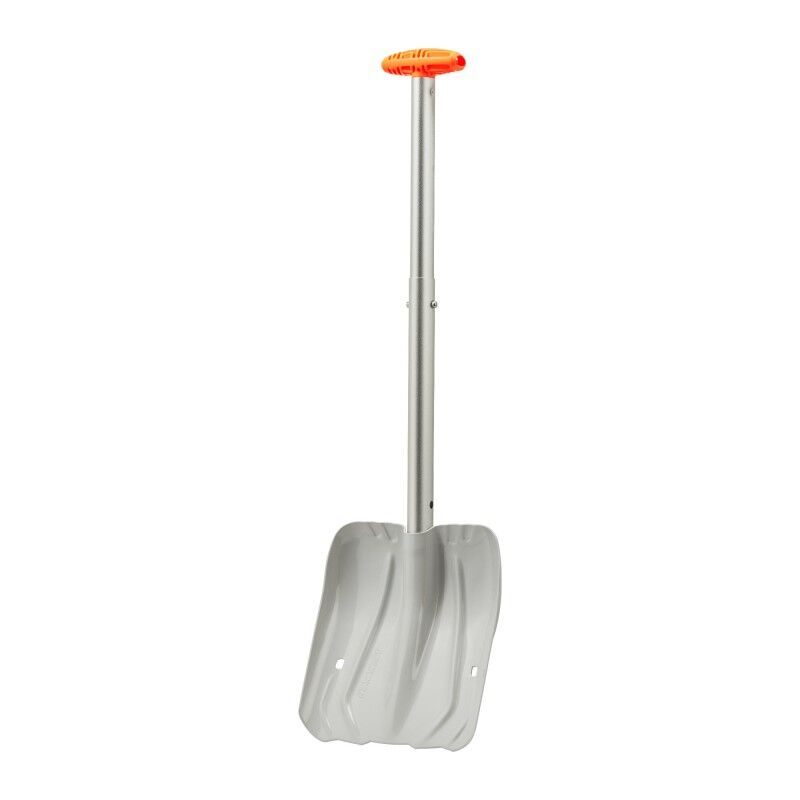
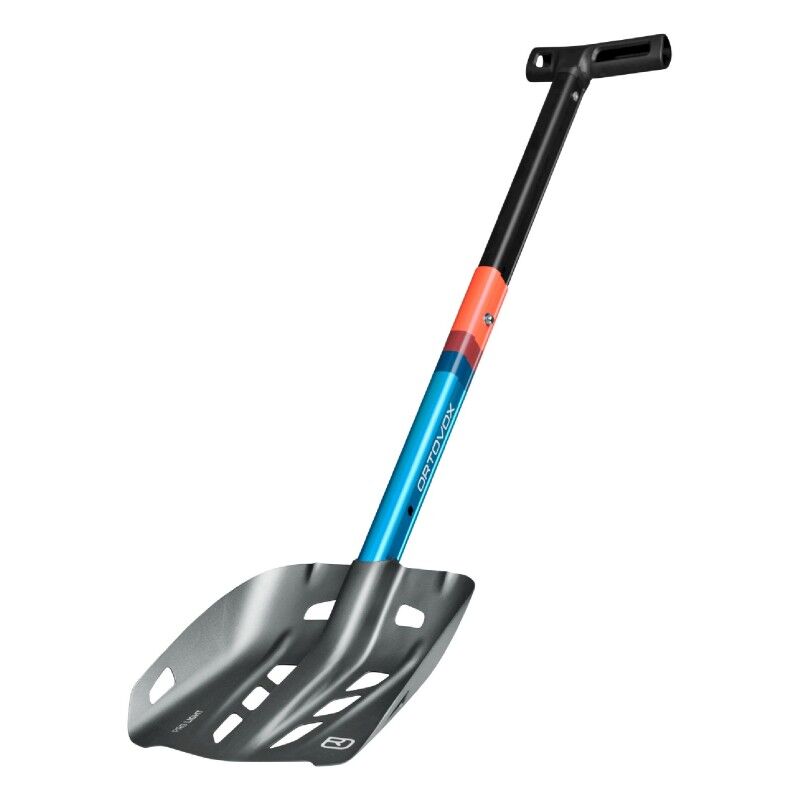
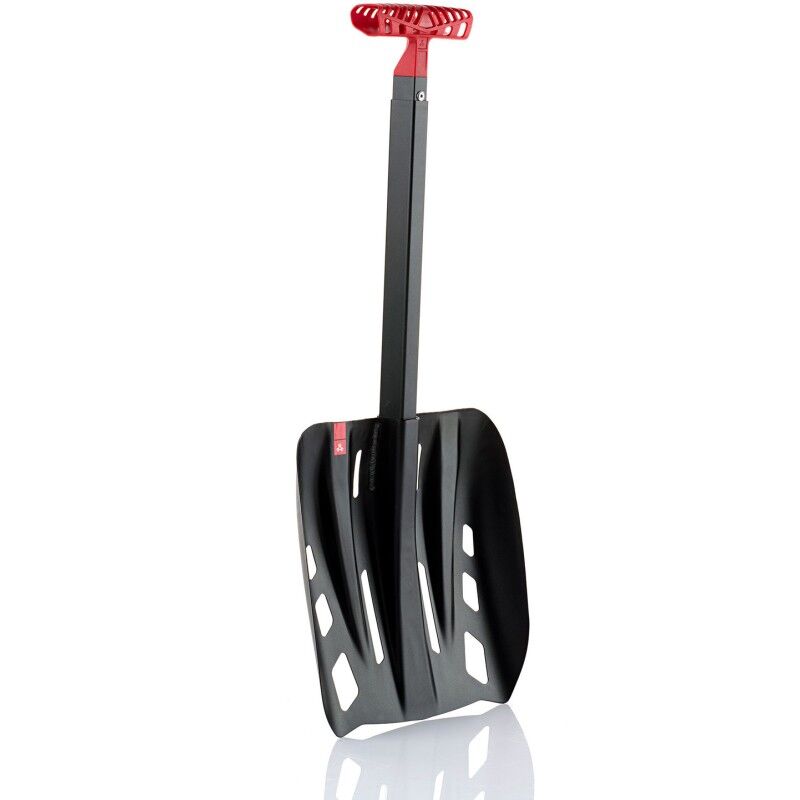
A crucial element of the complete avalanche safety equipment, the avalanche shovel is essential for the phase of digging out the buried victim, once you have located them with the DVA and confirmed their position with the avalanche probe. The snow removal phase is the longest and most exhausting part of the avalanche victim search. Indeed, the snow from avalanches is hard and often consists of large blocks, as the most significant elements rise physically during an avalanche. You will therefore be dealing with large, heavy, and numerous blocks of snow on the surface, which suitable Avalanche Safety Gear & Equipment can help you move effectively. Thus, the avalanche shovel is an essential component of Avalanche Safety Gear & Equipment, as it allows you to dig through the snow, a task you cannot perform without equipment. Digging with your hands can never replace the use of the effective and efficient Avalanche Safety Gear that the avalanche shovel represents.
To effectively clear the snow and avalanche blocks to reach the buried victim, your avalanche shovel must be sturdy and durable, and offer sufficient volume to perform large shovelfuls of snow and be as effective as possible during the extraction. Removable as it is constructed in two parts, this Avalanche Safety Gear consists of the shovel handle and its scoop, which usually clips together easily via press buttons. The shape of the shovel handle also plays a significant role in its grip, and thus in the effectiveness of this Avalanche Safety Gear. Additionally, the composition of shovels, usually made of aluminium, and their sharp attack edge allow you to effectively dig through the hard avalanche snow. A shovel as Avalanche Safety Gear presents a scoop with holes on the side (2 or 4), allowing it to transform into a rescue sled. You can thus evacuate the victim from the site of the avalanche, which may still be dangerous and could be the scene of a secondary avalanche. Indeed, a sled made with elastic ropes and skis allows you to transport an injured victim to a safe area while waiting for help. This Avalanche Safety Gear must therefore be wisely chosen to help you effectively clear the thick layer of snow under which your freerider group skier is located and evacuate them safely.
Avalanche Safety Gear: The Airbag Pack
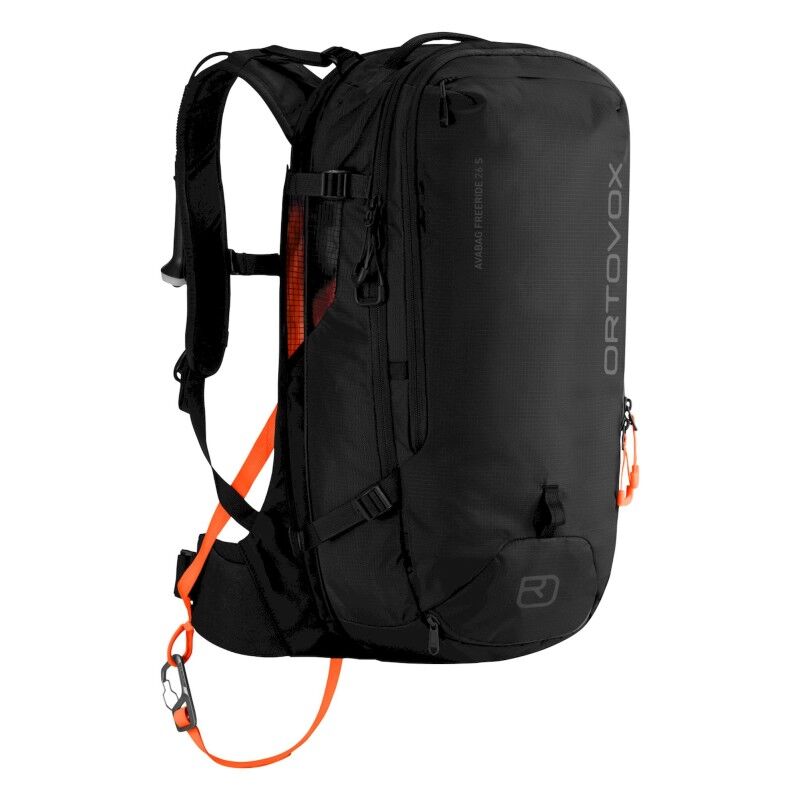
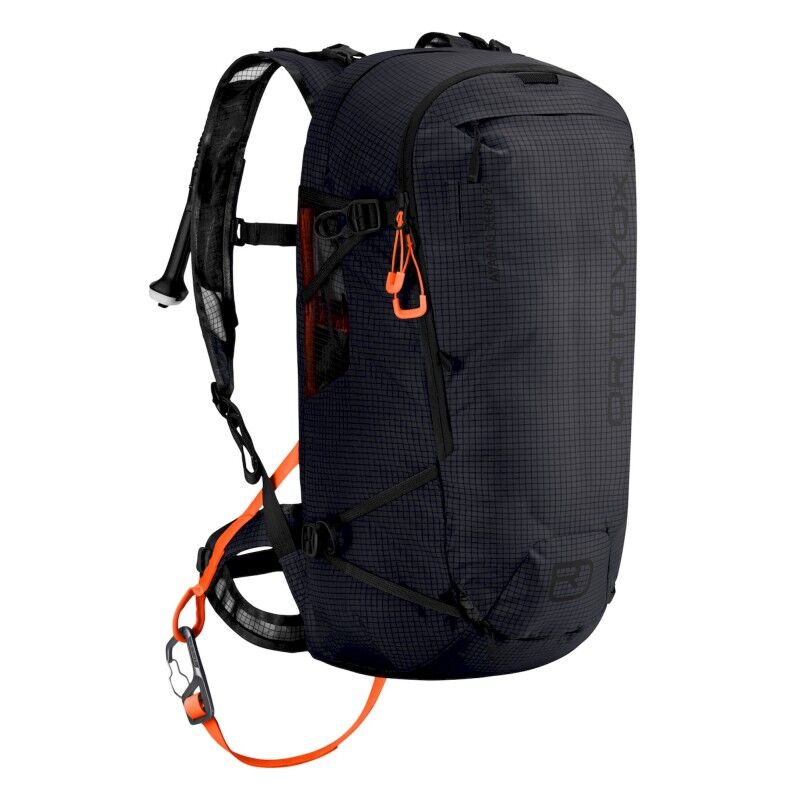
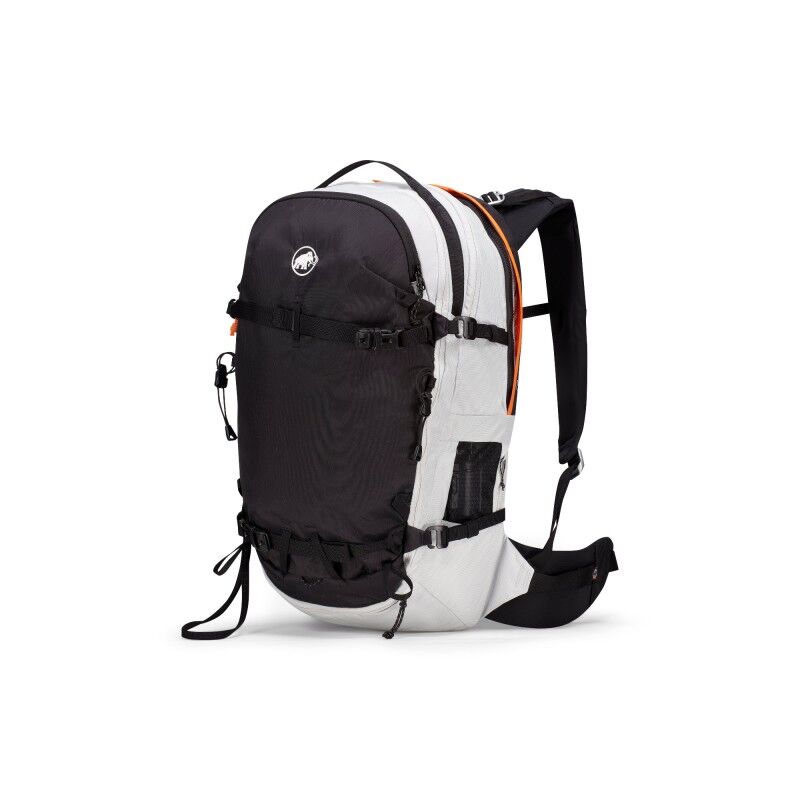
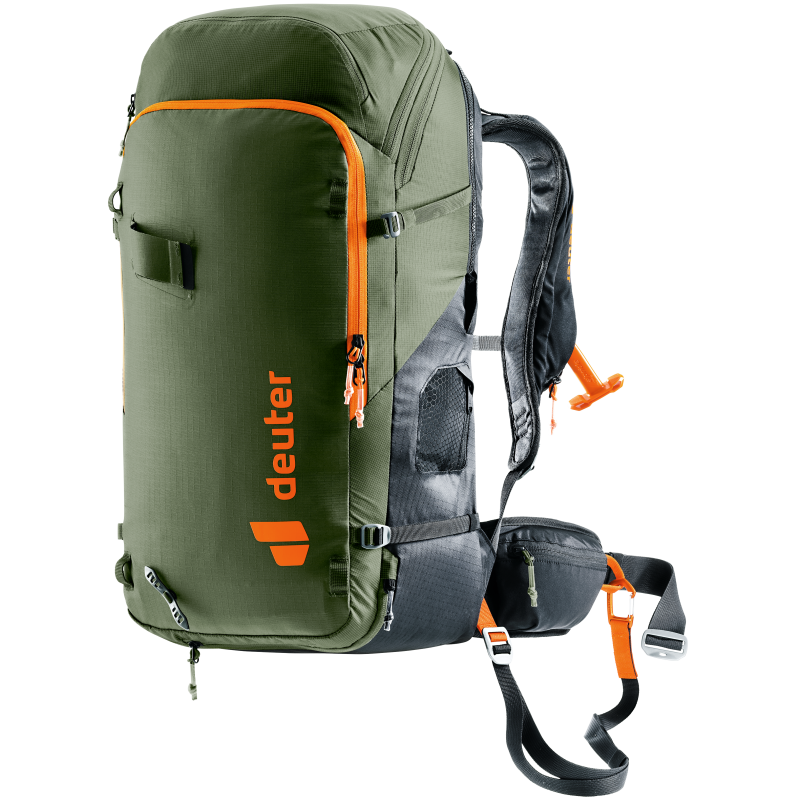
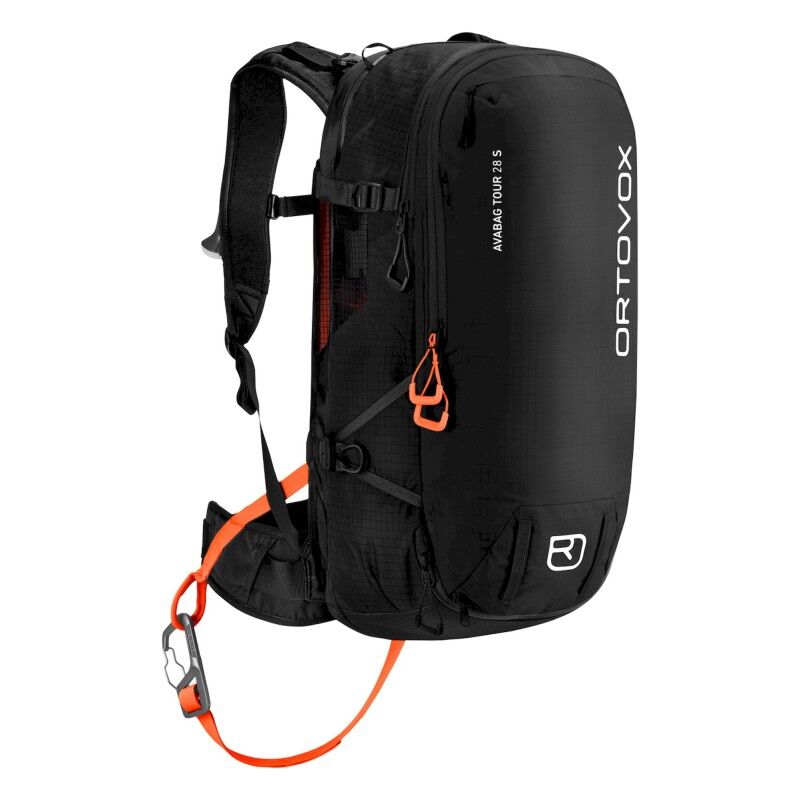
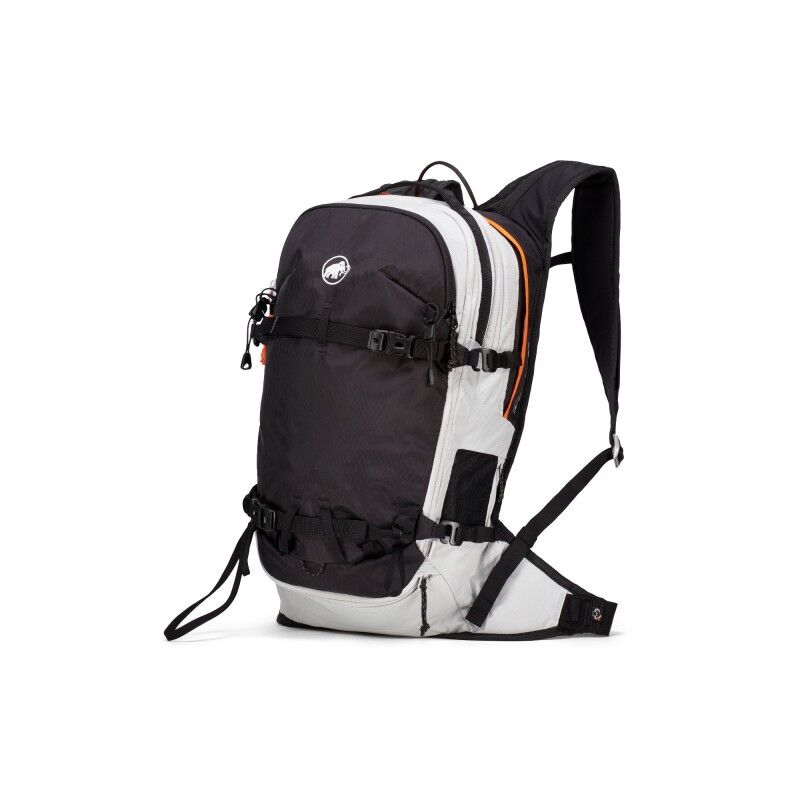
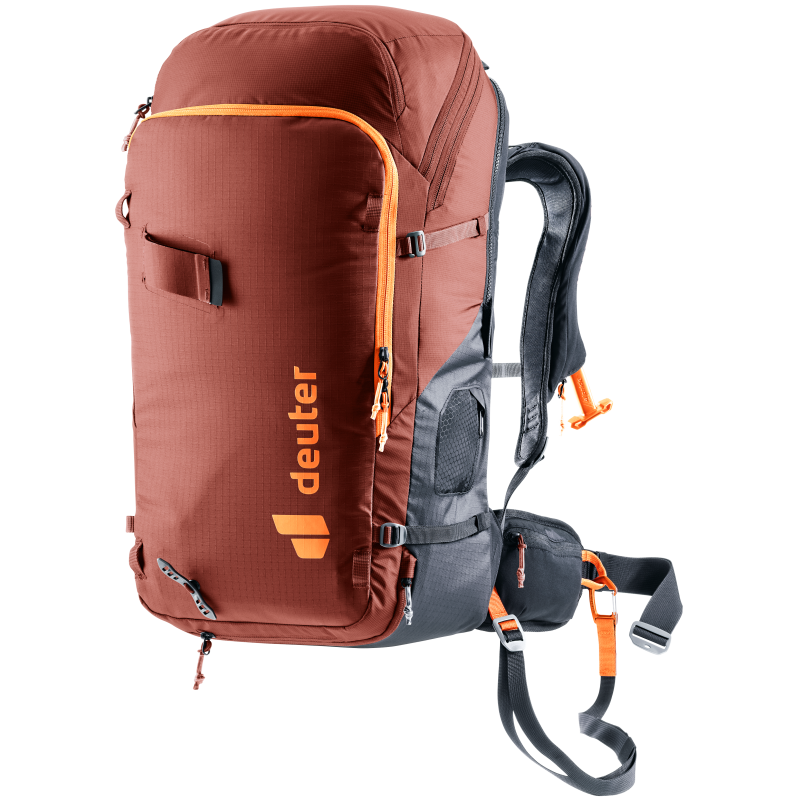
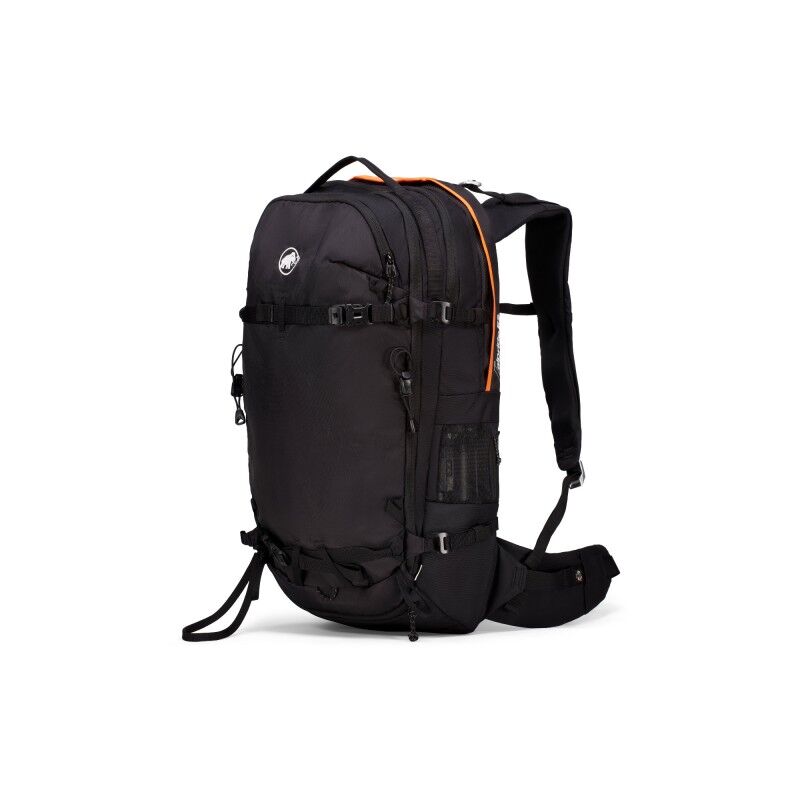
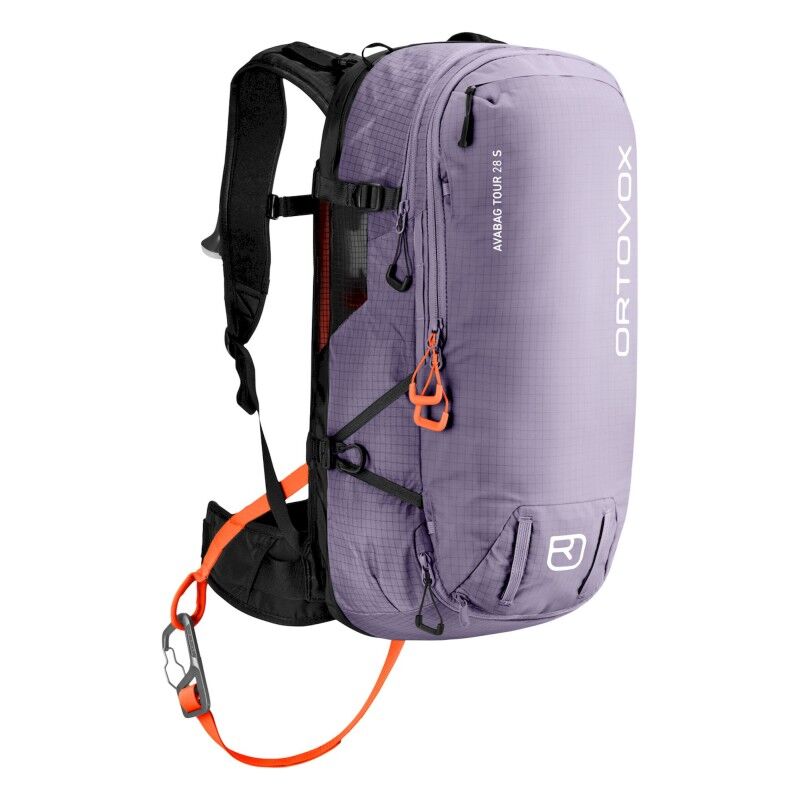
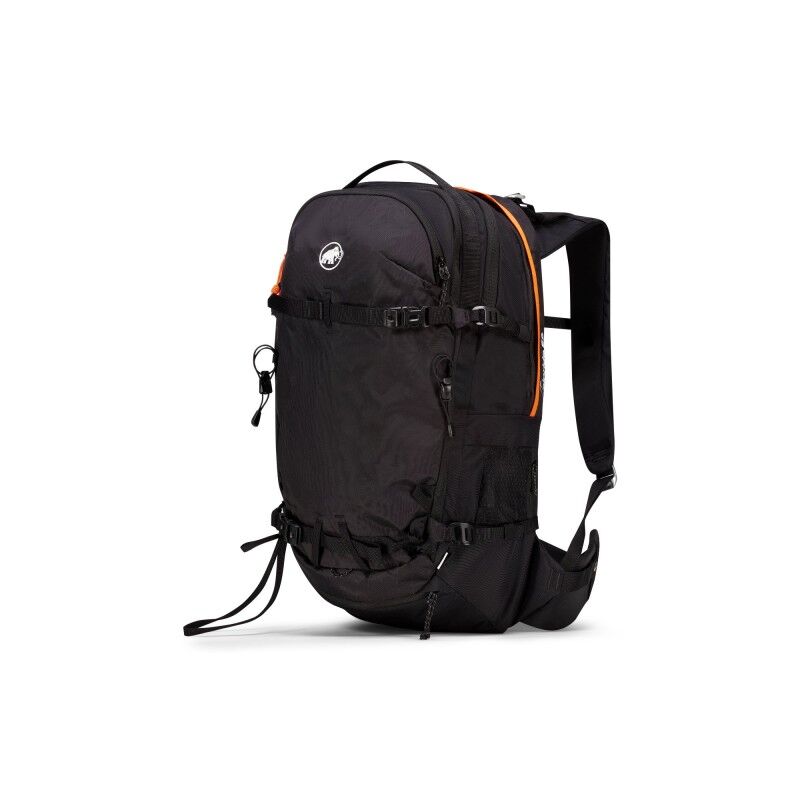
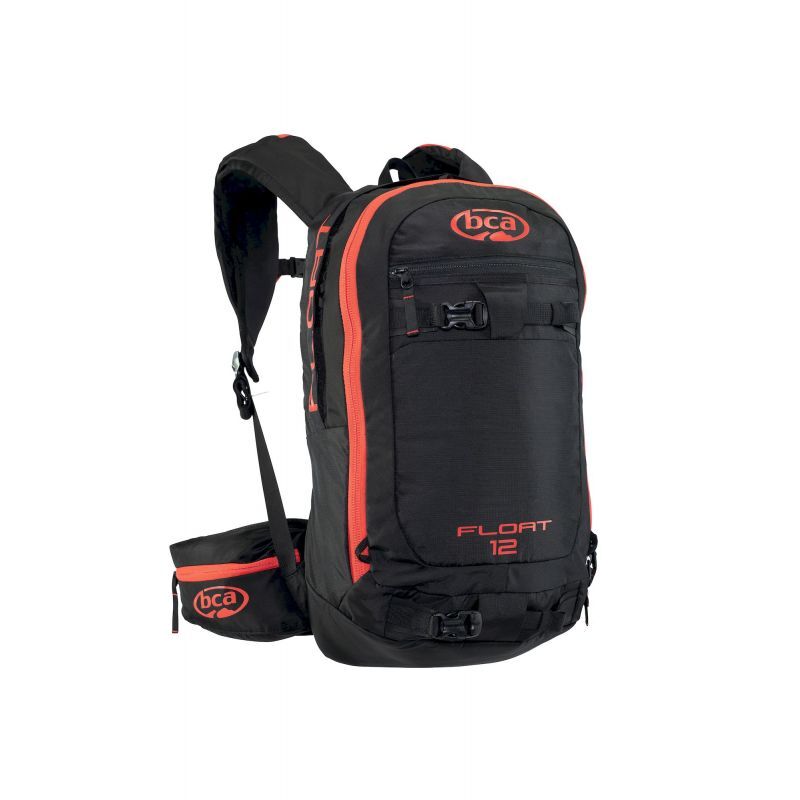
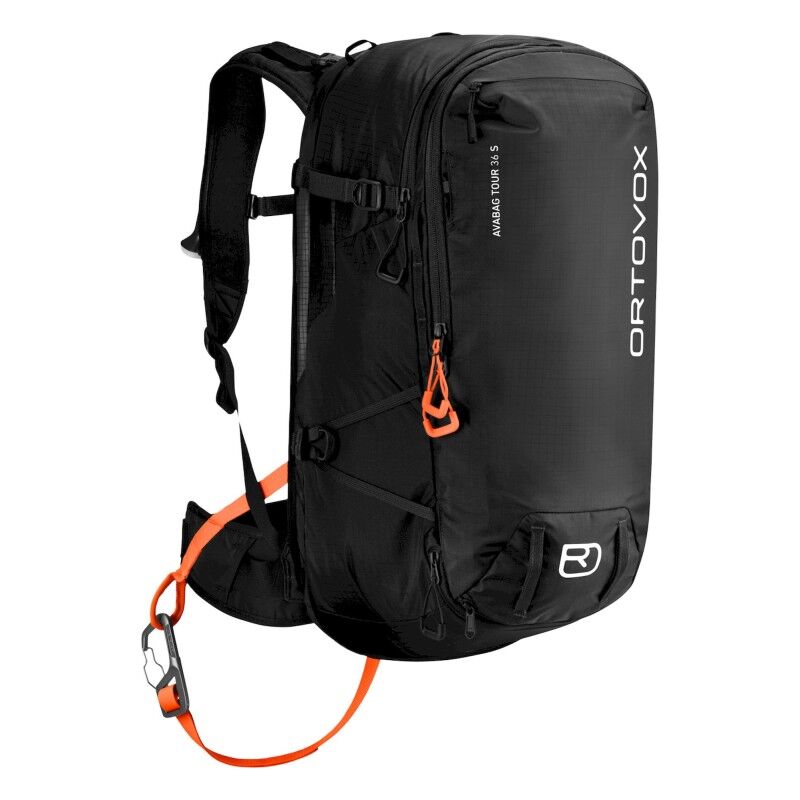
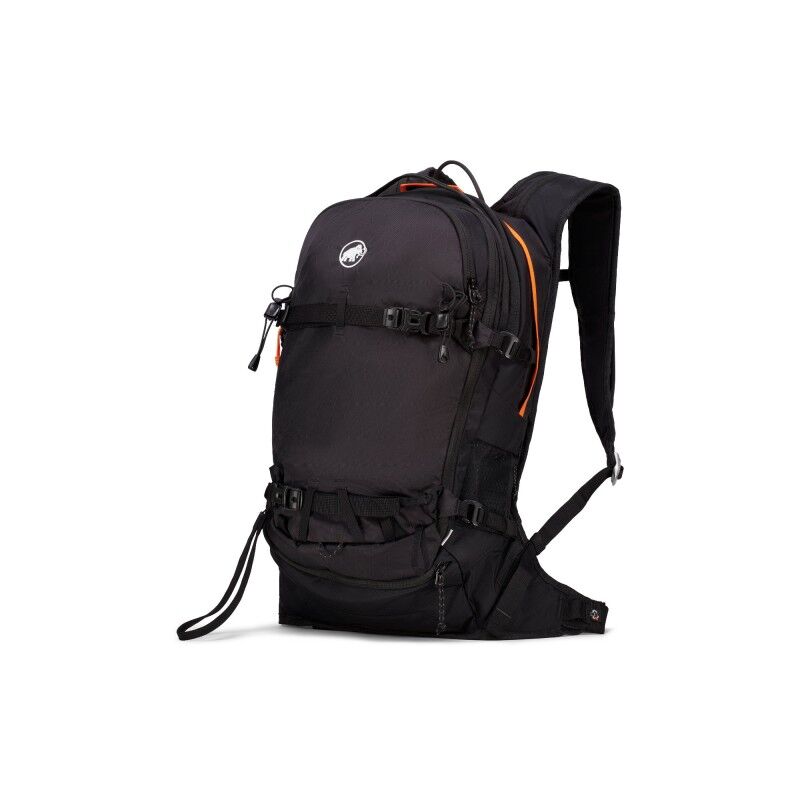
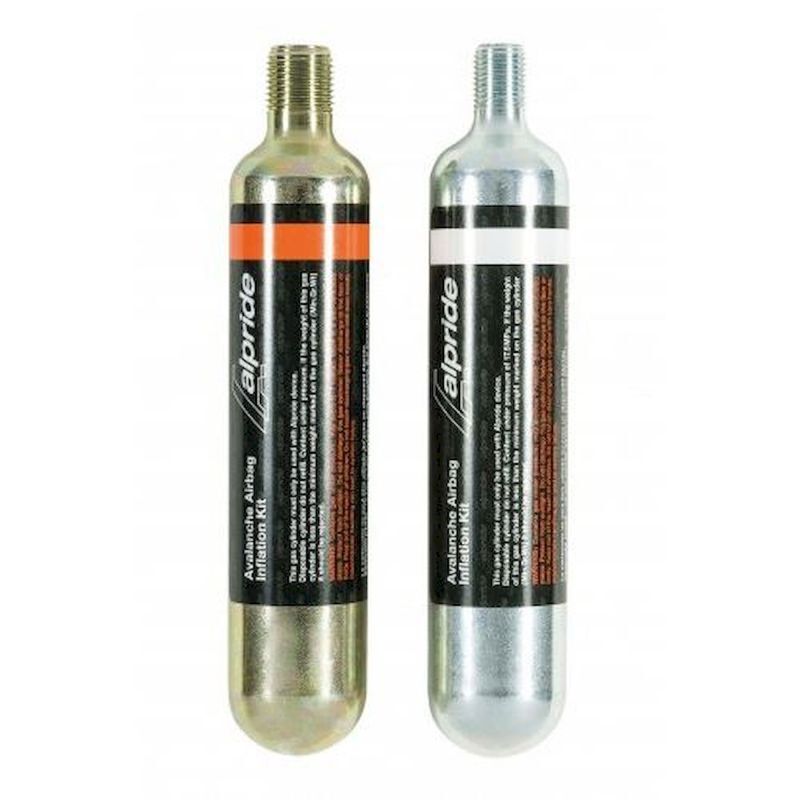
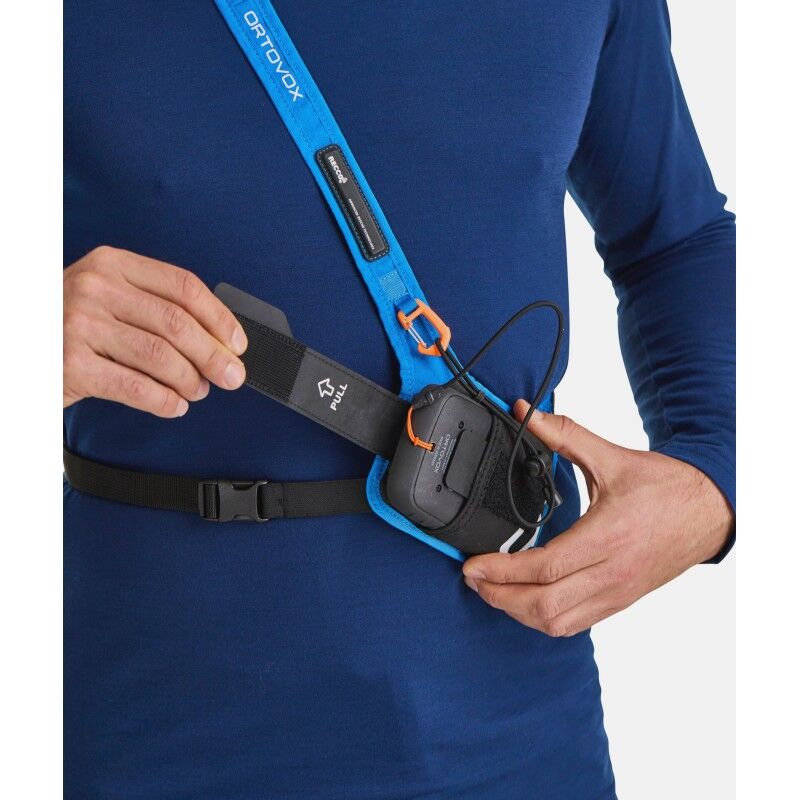
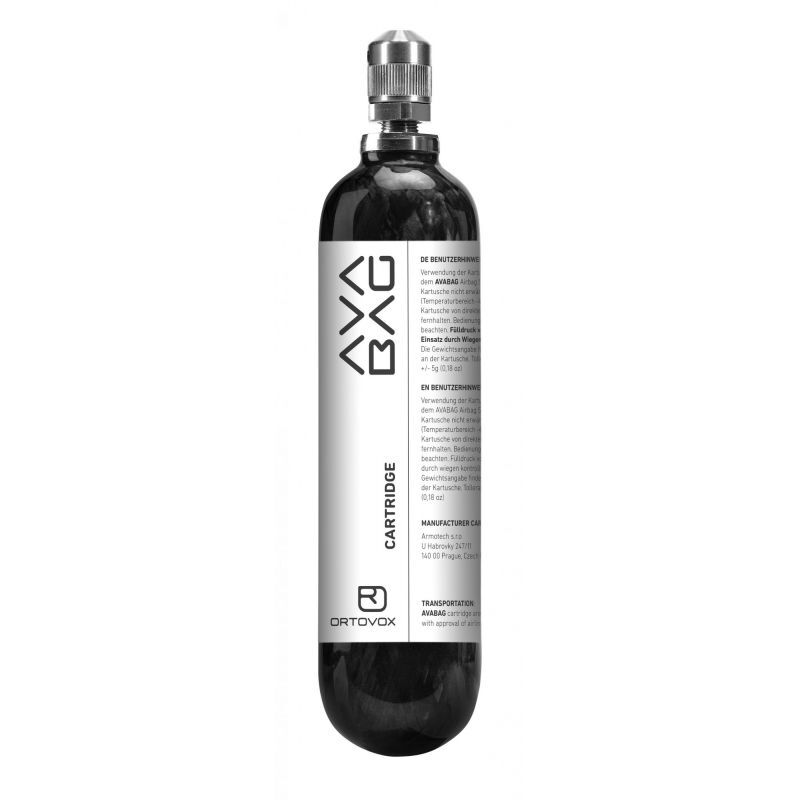
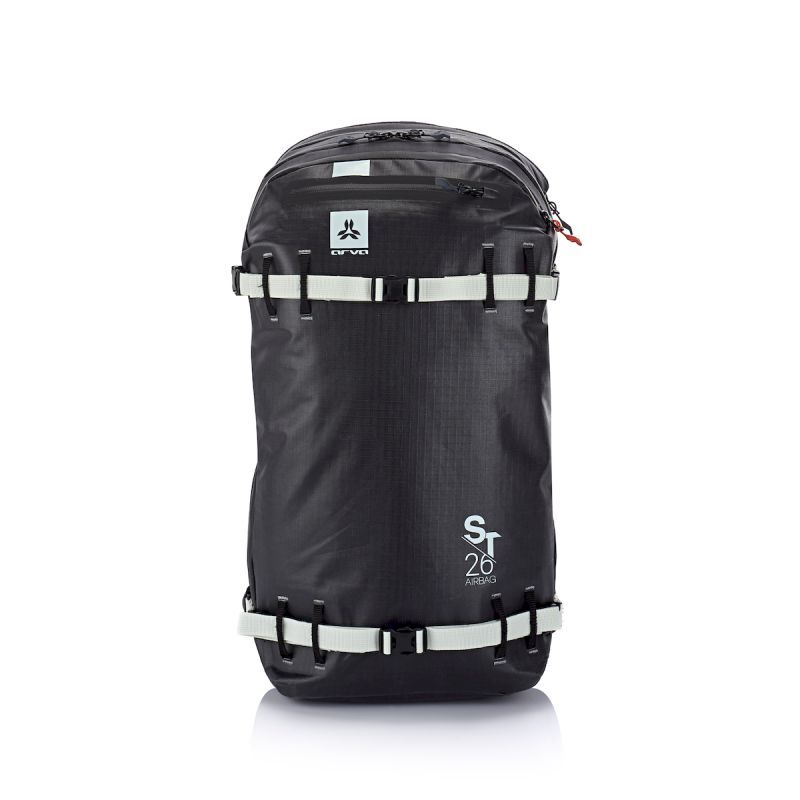
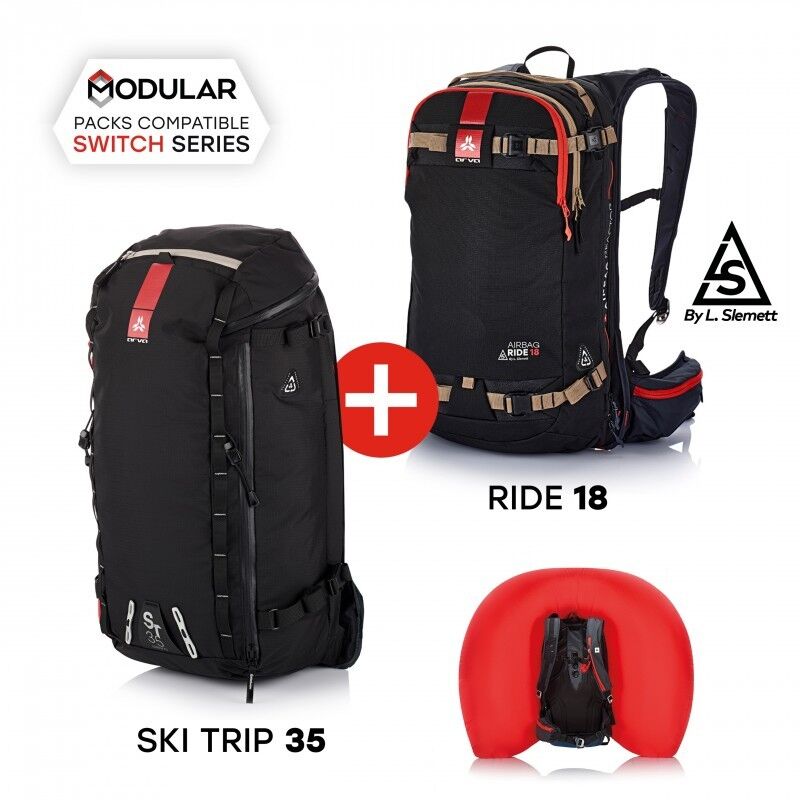
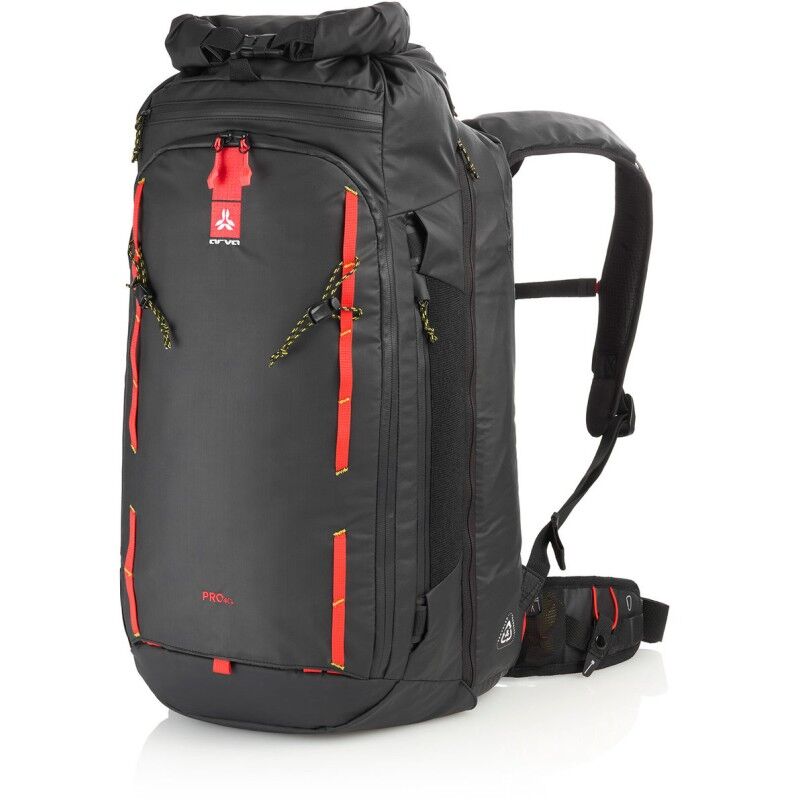
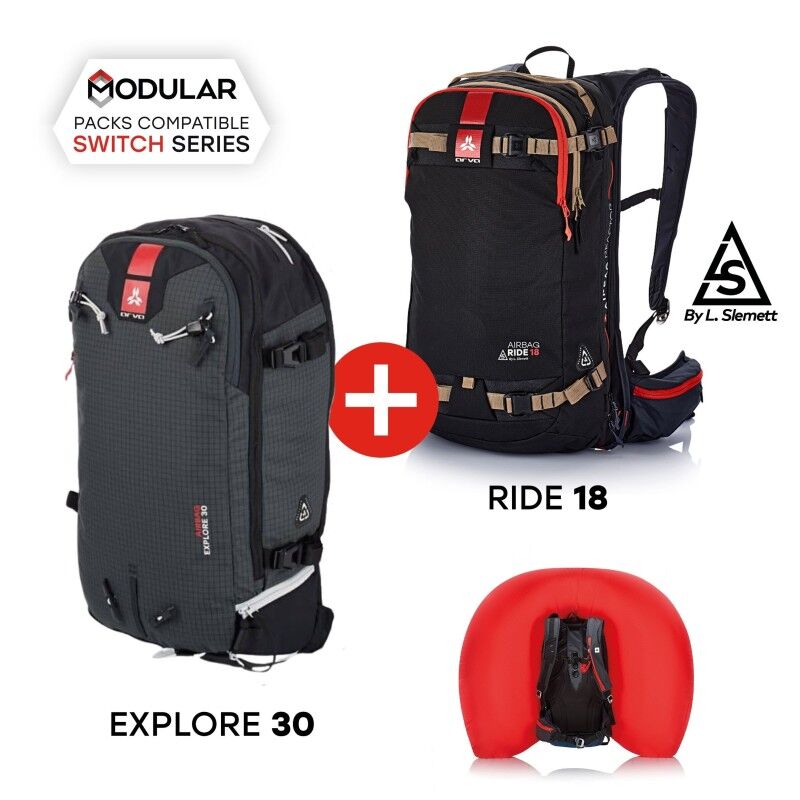
The basic Avalanche Safety Gear (trio DVA - Shovel - Probe) can be complemented by an airbag pack, to provide safety in the event of an avalanche and to react before the avalanche occurs. Indeed, an airbag pack is a Avalanche Safety Gear that allows you to achieve a larger surface area and volume via an airbag that inflates, helping you stay on the surface of the avalanche and sink as little as possible. Even if you are buried, your group of skiers will find you more quickly if you are not buried too deeply in the avalanche layer. A complementary and effective Avalanche Safety Gear, the airbag pack ensures safety when caught in an avalanche and effectively limits burial. When you notice that the snow slab beneath your feet begins to give way and slide down, you have a few seconds to trigger the inflation of your airbag pack. Thus, the larger the volume of your airbag, the more likely you are to stay on the surface. Also, ensure to choose an airbag pack with a reliable trigger system on the shoulder strap. This Avalanche Safety Gear is triggered via gas cartridges or by a fan and features numerous different airbag systems available on the market: Jetforce, Avabag, Reactor, Alpride, BCAFloat, RAS (Removable Airbag System: removable airbag packs), PAS (Protection Airbag System: the airbag is housed in the straps for better protection)... Additionally, this Avalanche Safety Gear has a protective role: some airbag packs offer complete coverage of the neck and back, providing more protective Avalanche Safety Gear against the forces and pressures exerted by an avalanche. Furthermore, airbag packs allow you to carry your Avalanche Safety Gear (shovel and probe) and store them in a dedicated, easily accessible compartment for quick deployment without wasting time. Moreover, airbag packs come in various weights and volumes, making them adaptable Avalanche Safety Gear to your practice and needs: long expeditions over several days in ski touring, weekends in freeride, or afternoons off-piste.
Avalanche Safety Gear: The Importance of Knowing Your Equipment
Avalanche Safety Gear & Equipment is strictly individual, ensuring that all off-piste skiers have a chance to save themselves or others. As Avalanche Safety Gear consists of technical or very technical products, it is crucial to know your Avalanche Safety Gear & Equipment well and to know how to use it effectively. Indeed, this directly impacts your ability to rescue victims in an avalanche situation, and thus their chances of survival. There is no need to equip yourself with overly technical Avalanche Safety Gear & Equipment, as it is primarily about knowing how to use it in the field. The stress and cold conditions of an emergency situation like an avalanche must be taken into account when choosing Avalanche Safety Gear that is simple and suitable for use. Be careful to choose Avalanche Safety Gear & Equipment that is well-suited to your skiing practice and your knowledge of victim search techniques, as well as your needs and the number of skiers in your freerider group. Good knowledge of your Avalanche Safety Gear & Equipment also comes from training, which is essential and offered by some resorts through courses (especially for the DVA).
Find Your Avalanche Safety Gear & Equipment at Hardloop.co.uk
Essential for any off-piste outing, whether in ski touring, freeride, or ski mountaineering and snowshoeing off-piste, Avalanche Safety Gear & Equipment is a crucial element for the survival of avalanche victims. Comprising a DVA, a shovel, an avalanche probe, and an airbag pack as a complement, Avalanche Safety Gear & Equipment saves lives and allows for correct and rapid responses to avalanche situations, which are frequent and unpredictable in the mountains. Do you have a question or doubt regarding your Avalanche Safety Gear & Equipment? Contact our team at 01 48 58 30 28 (free call) or by email at hello@hardloop.com. We will be delighted to answer all your questions and guide you in choosing the Avalanche Safety Gear & Equipment most suited to your off-piste practice.