
Ski Boots
(93)
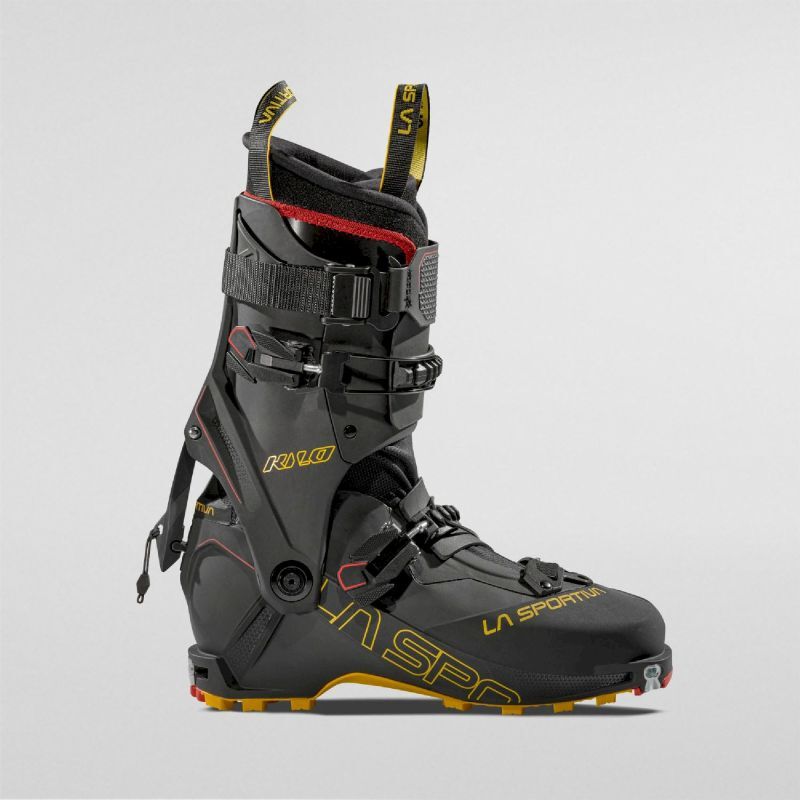
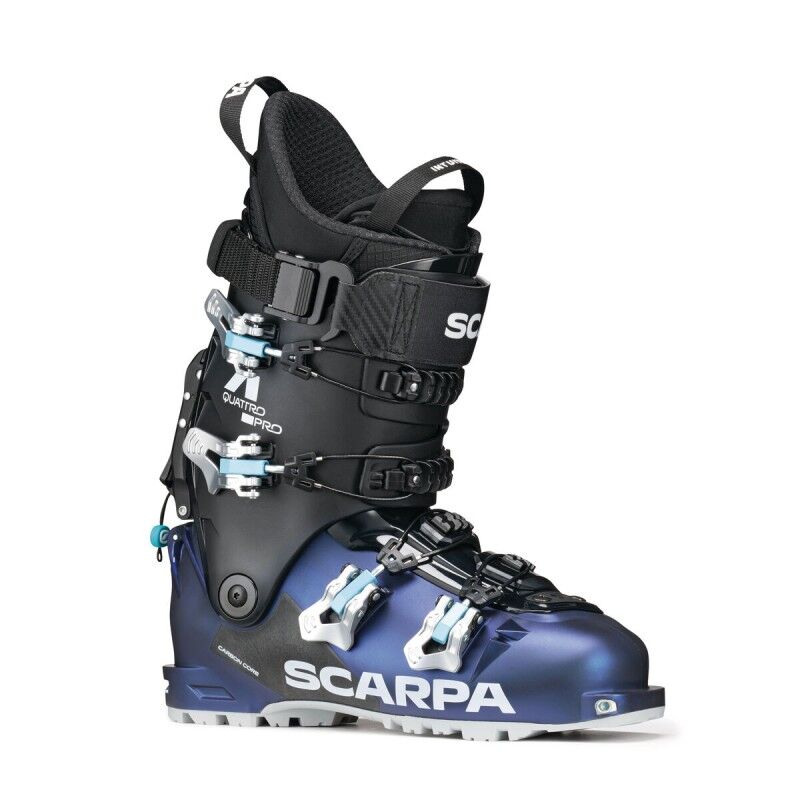
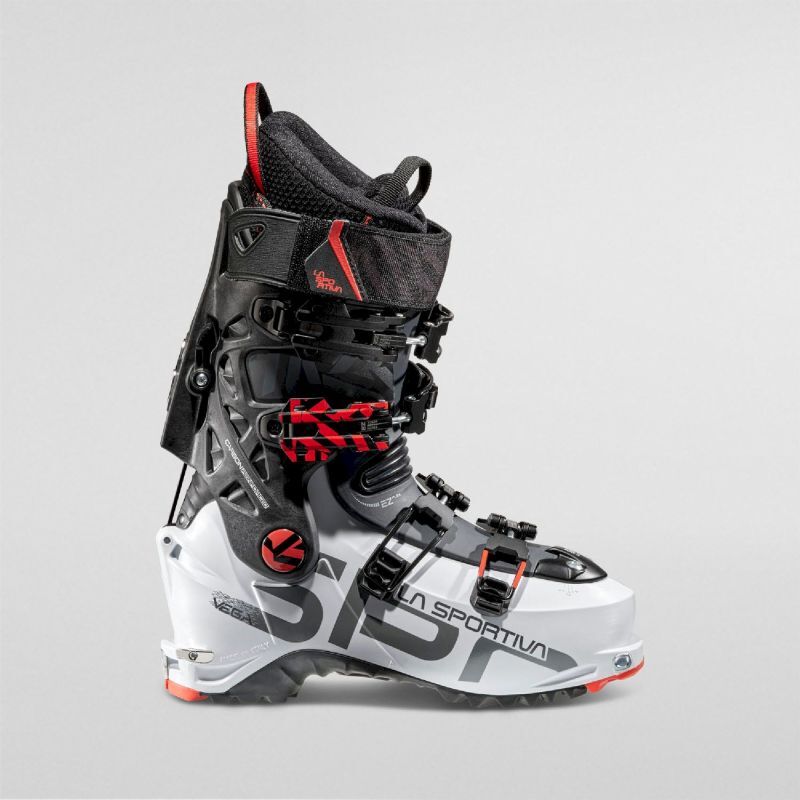
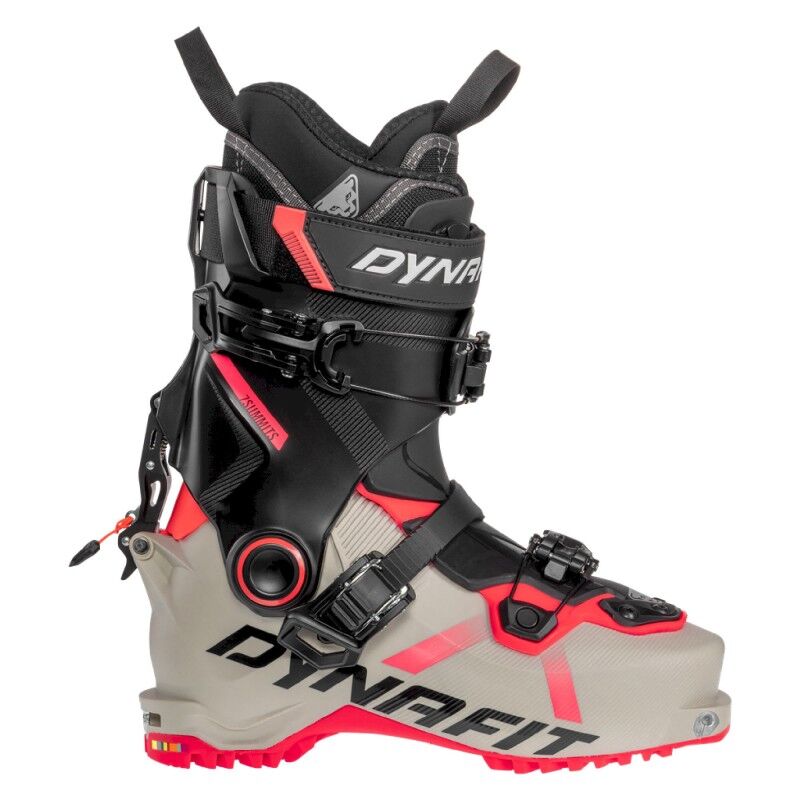
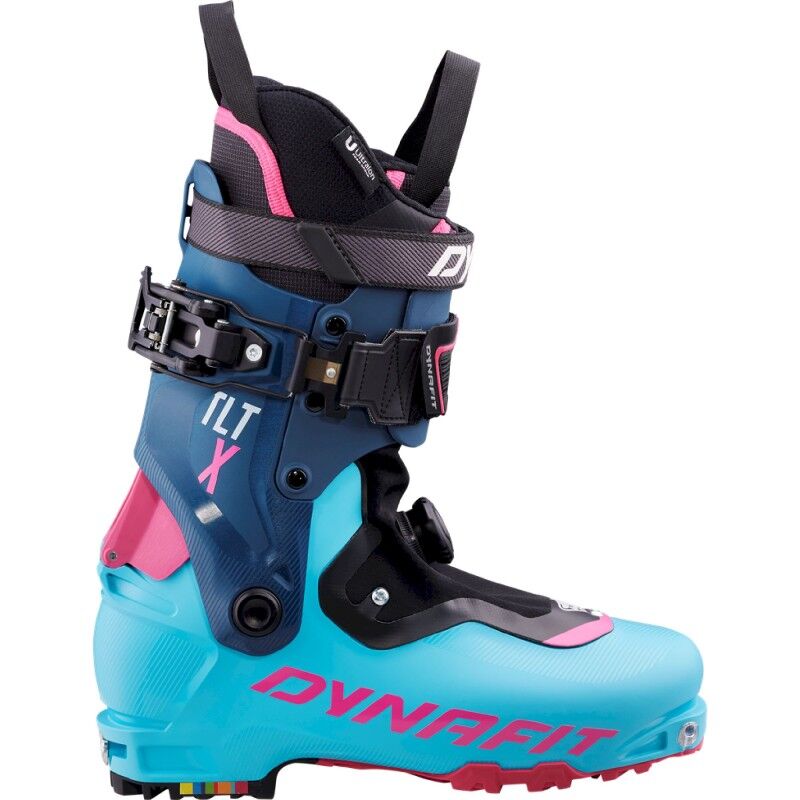
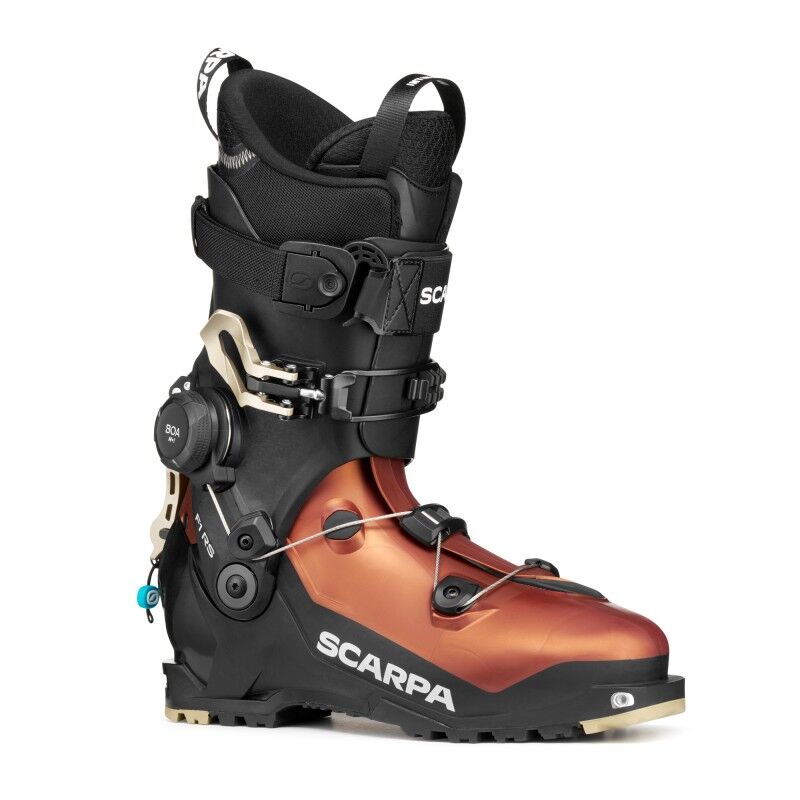
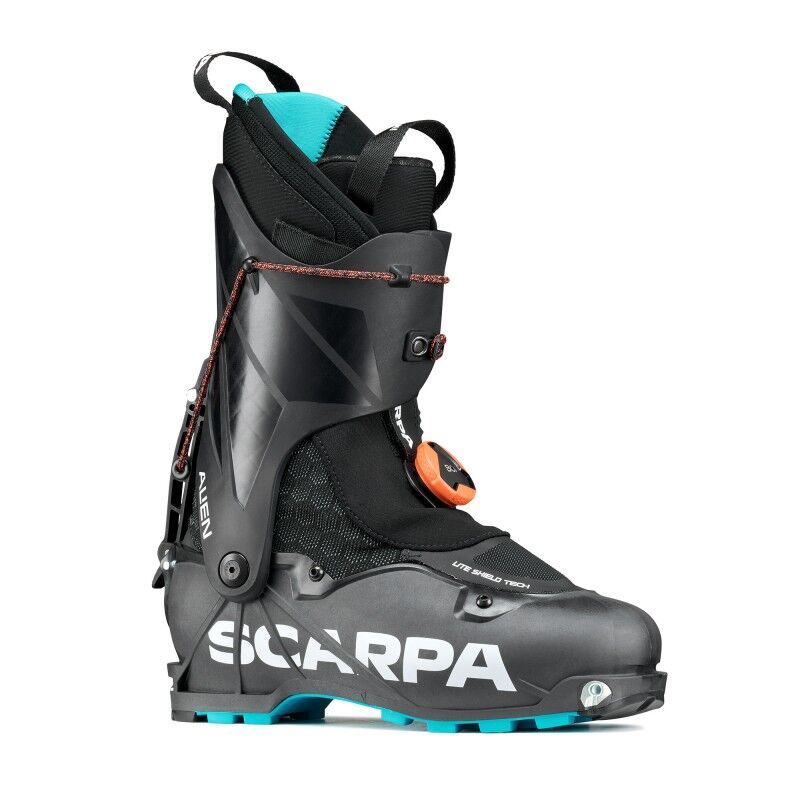

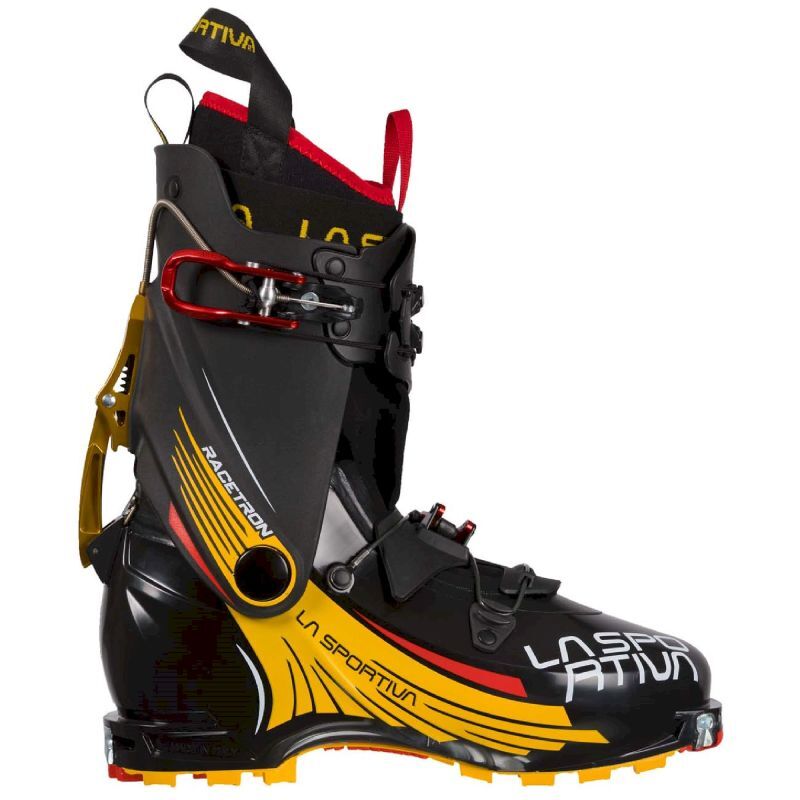
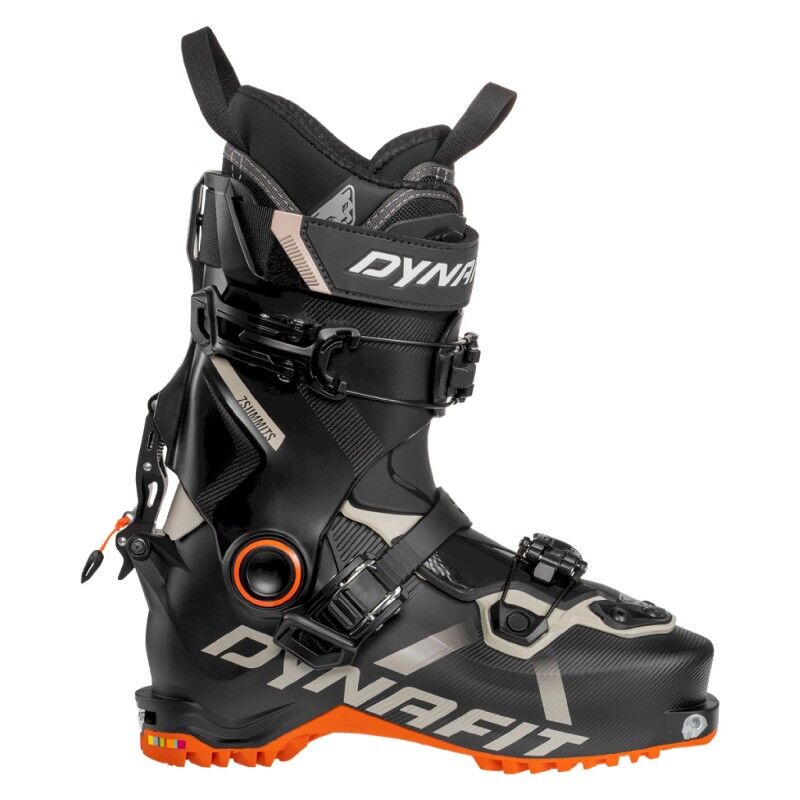
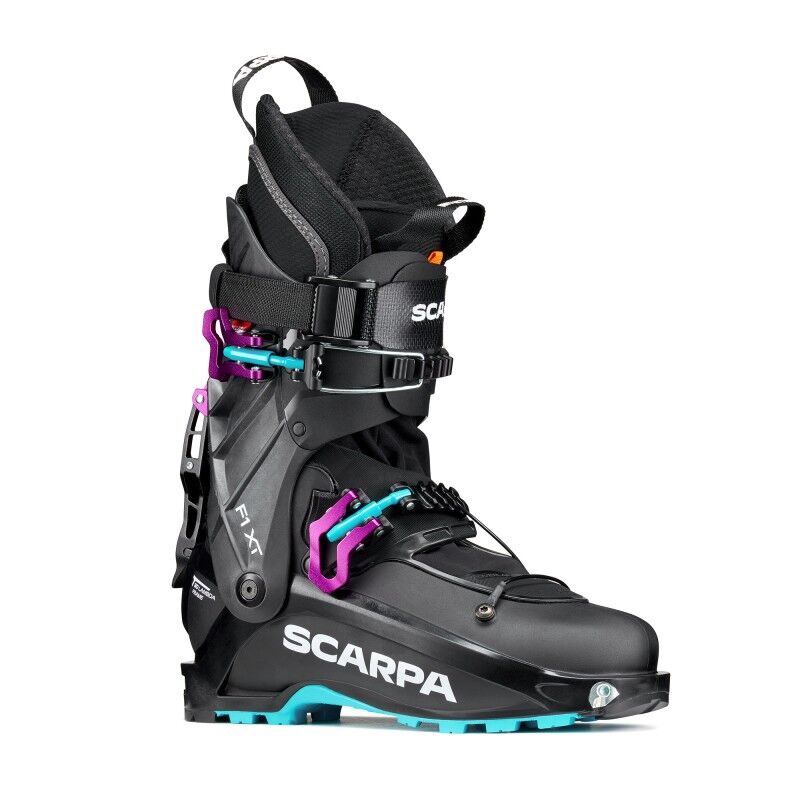
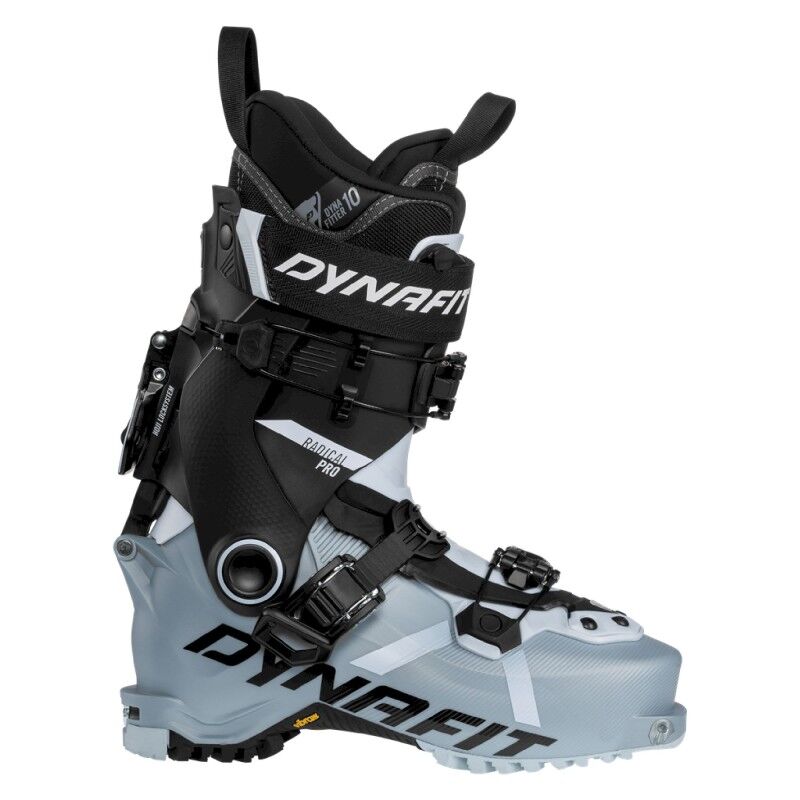
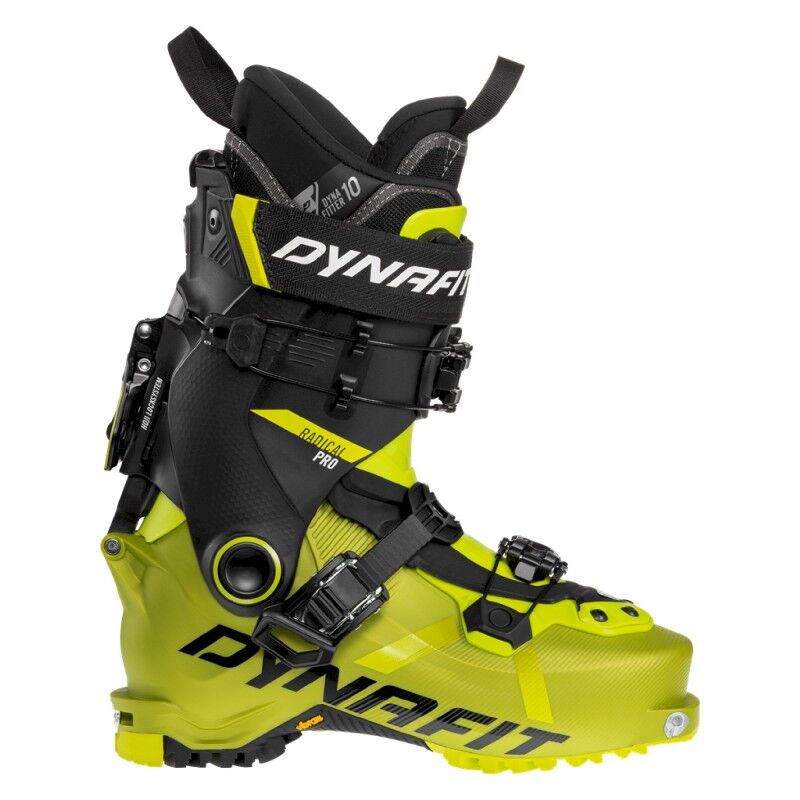



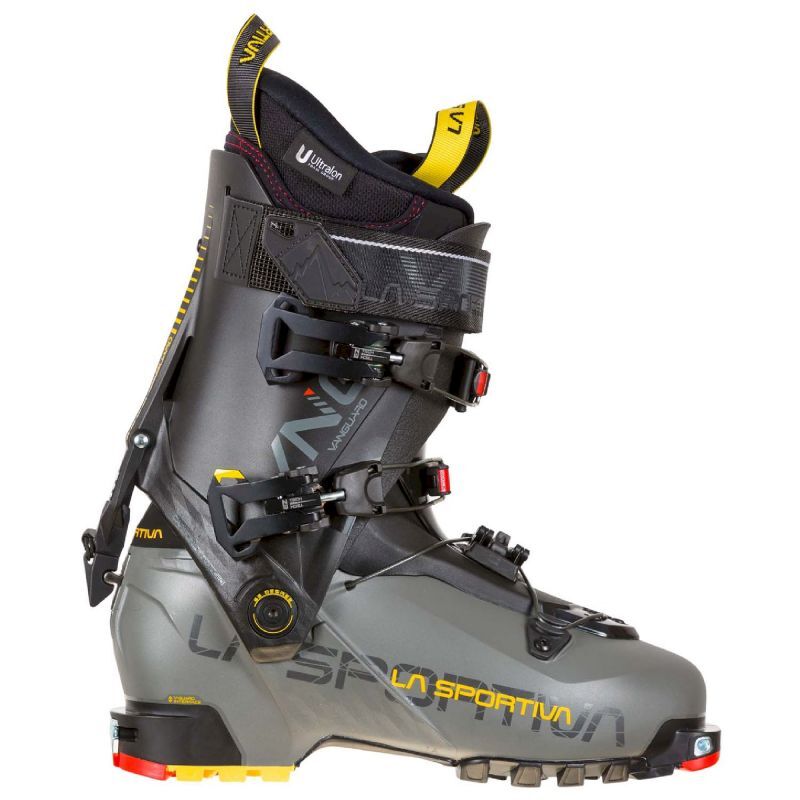
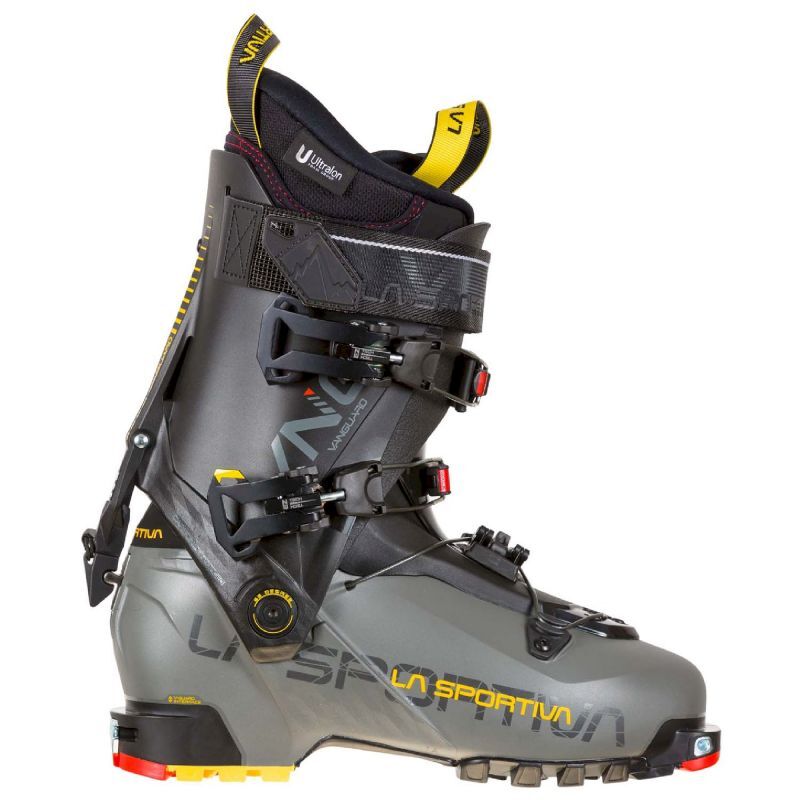
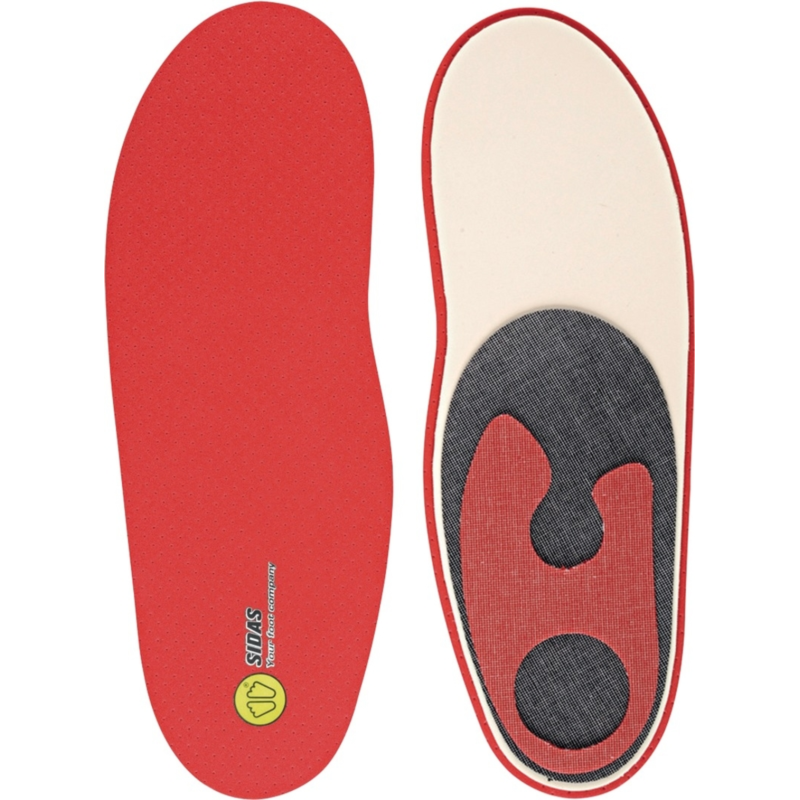
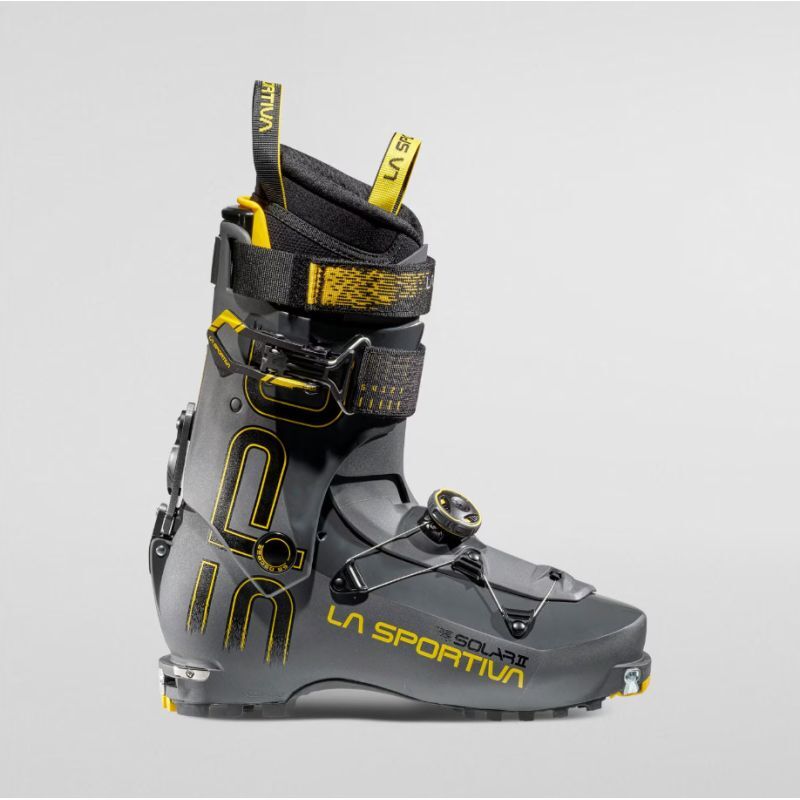
Ski Boots, the essential piece of ski equipment that makes all the difference on the slopes
The ski, what a wonderful invention! The season is approaching and you can already see yourself putting on your skis, donning your ski jacket, pulling out your gloves, your hat, in short, the complete outfit! But one essential element is missing from your gear: ski boots. And you must not rush into the first pair you find, which you would soon regret! Too big, too tight, too small, too wide: choosing ski boots is not simple. Yet, their role is crucial. Indeed, ski boots are designed to support your ankle and feet, but also to transfer the energy you exert to your skis to glide down the slopes effectively. However, with so many parameters to consider, ski boots can quickly become a real headache: liner, shell, flex index, Mondopoint size, soles… If all this seems like a vast jumble to you, then you are in the right place! Discover in this article all the essential data to understand ski boots and how to choose them wisely.
How to choose your ski boots wisely?
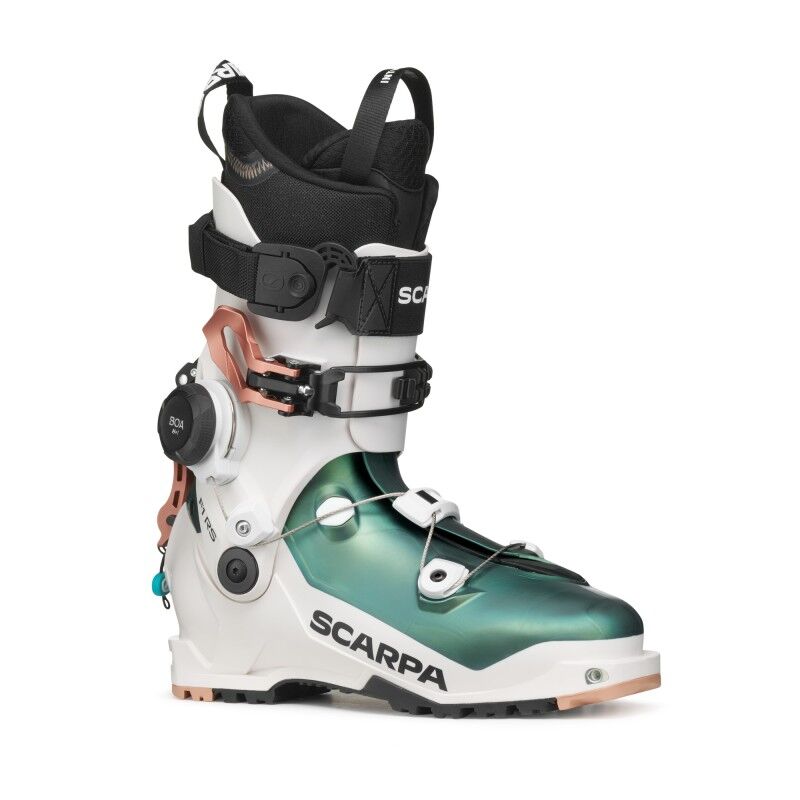
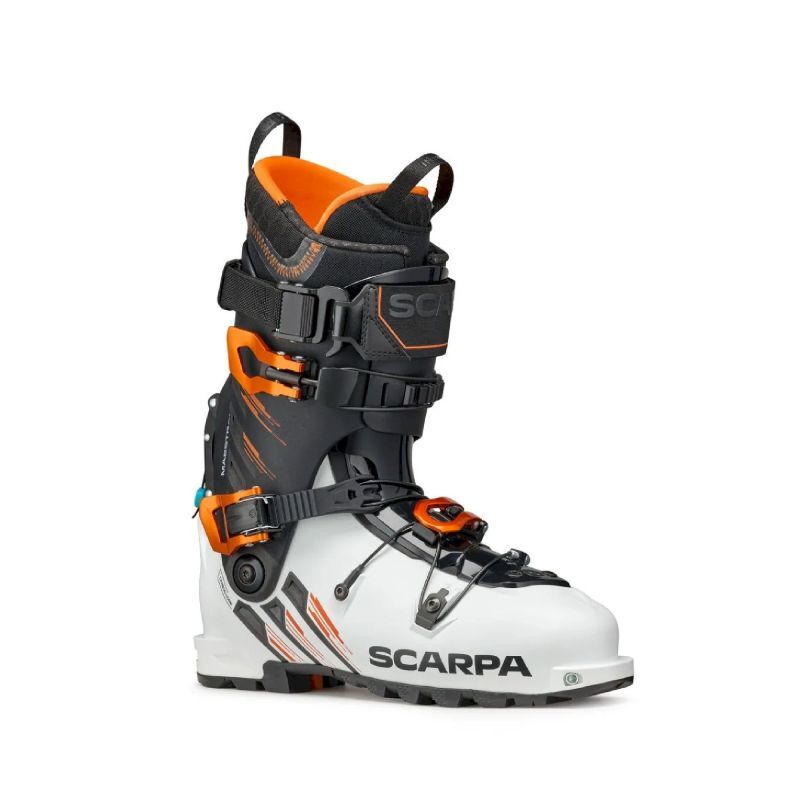
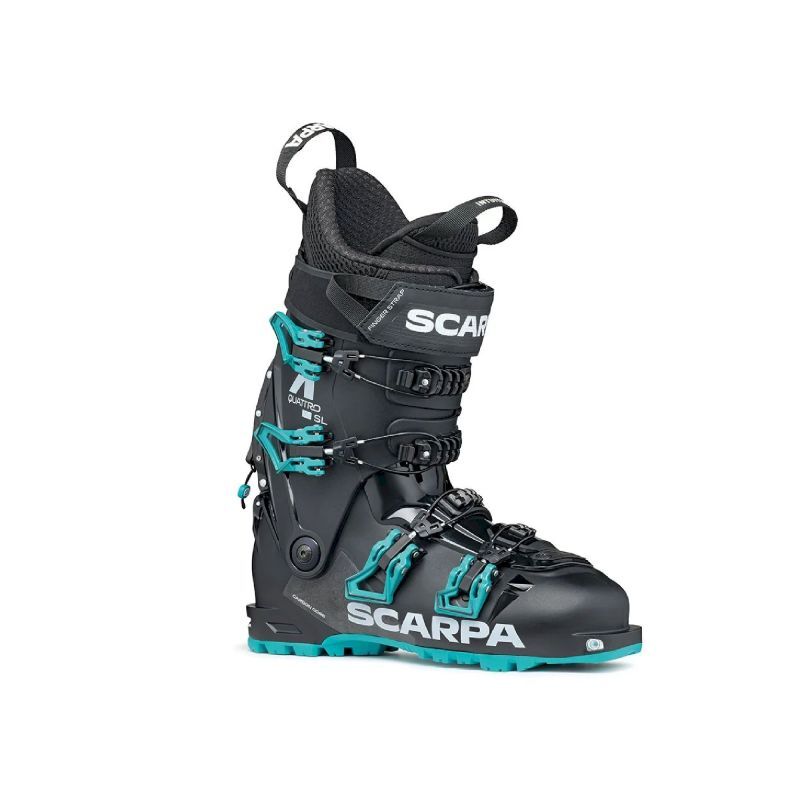
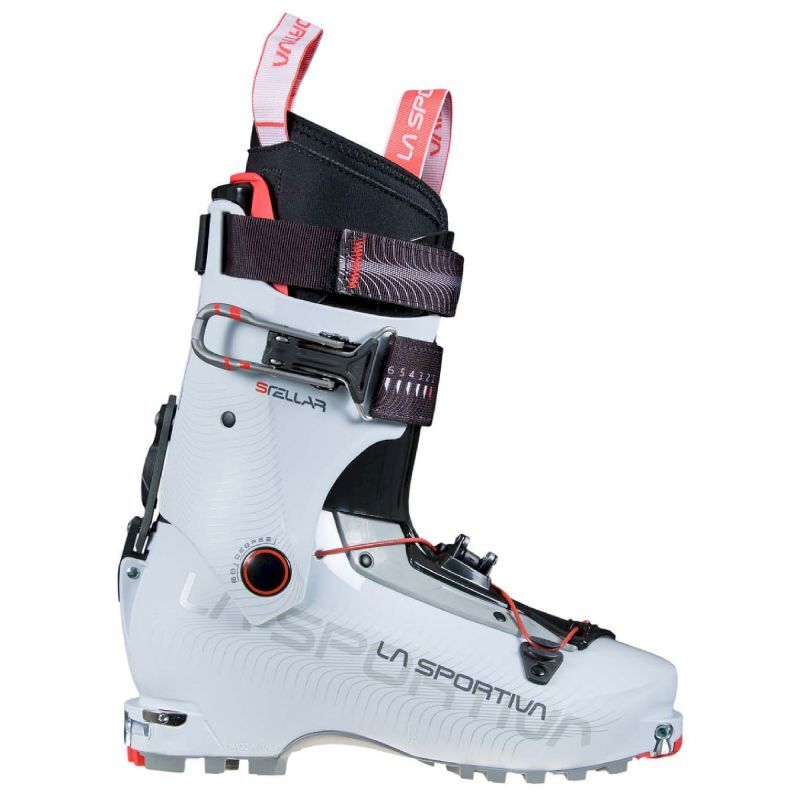
There’s no need to venture into technical explanations before understanding what makes up a ski boot. Liner, shell, buckles, strap, and tongue will be dissected to help you grasp the importance of each element that makes up ski boots.
The composition of a ski boot
Ski Boots: the importance of the liner
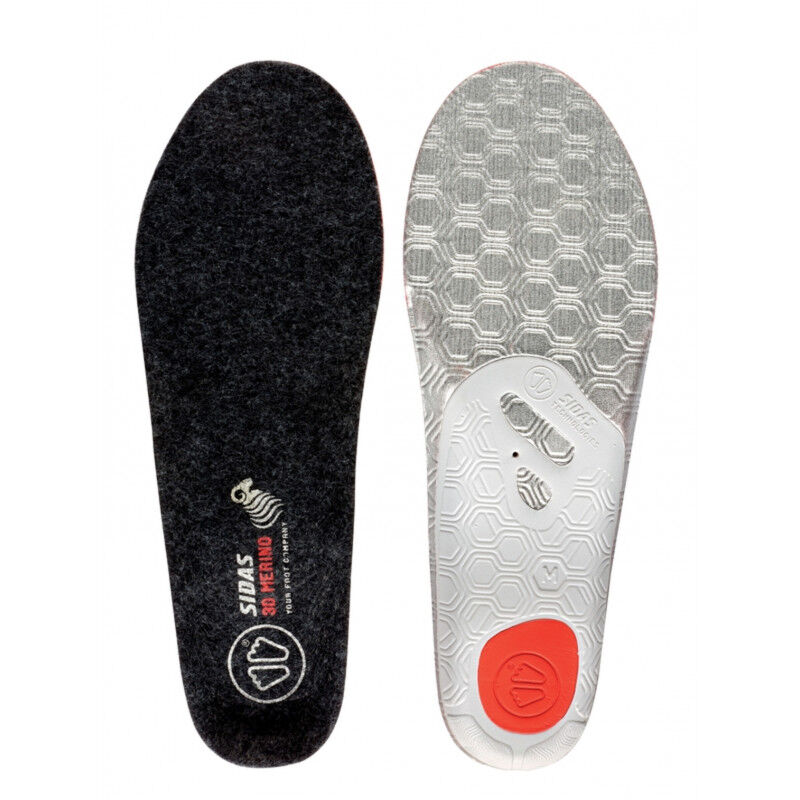
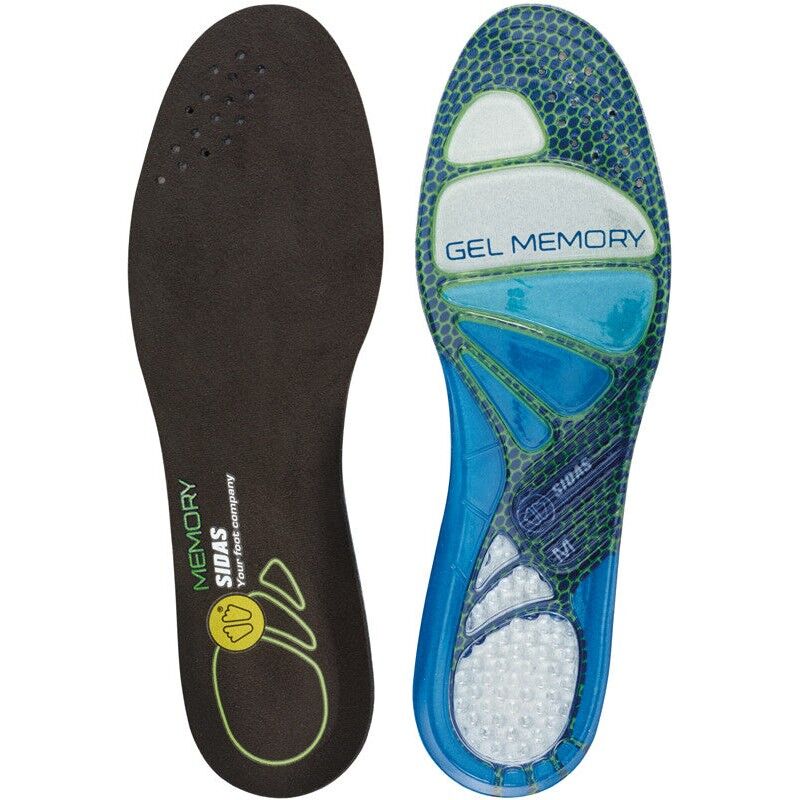
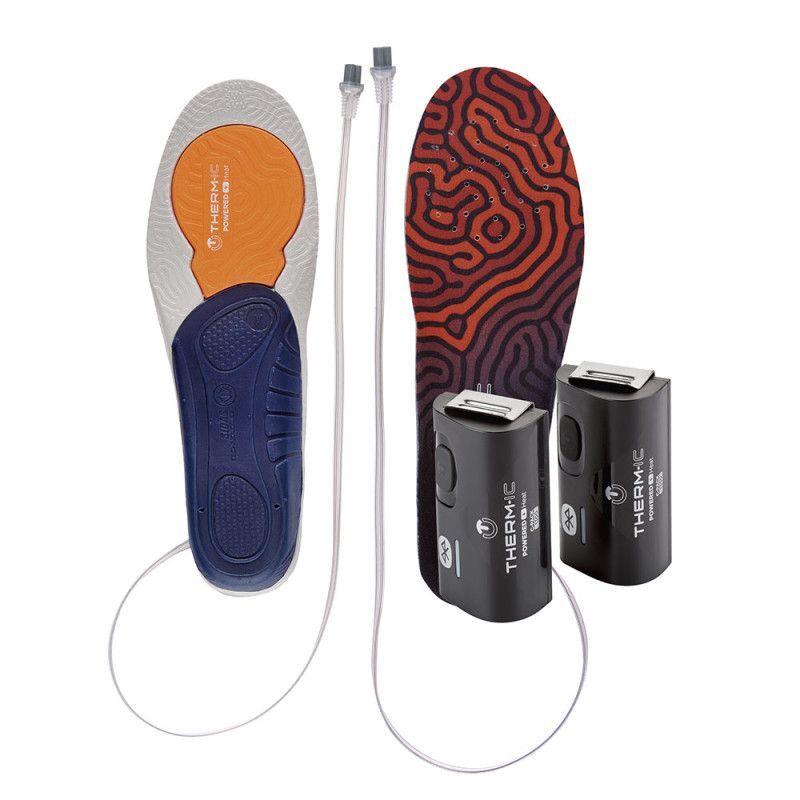
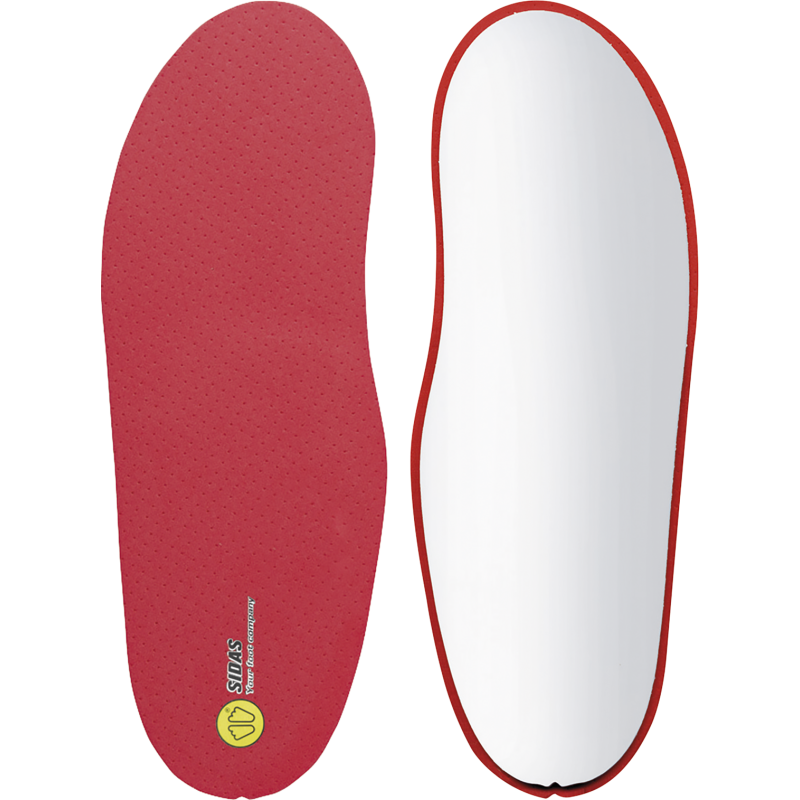
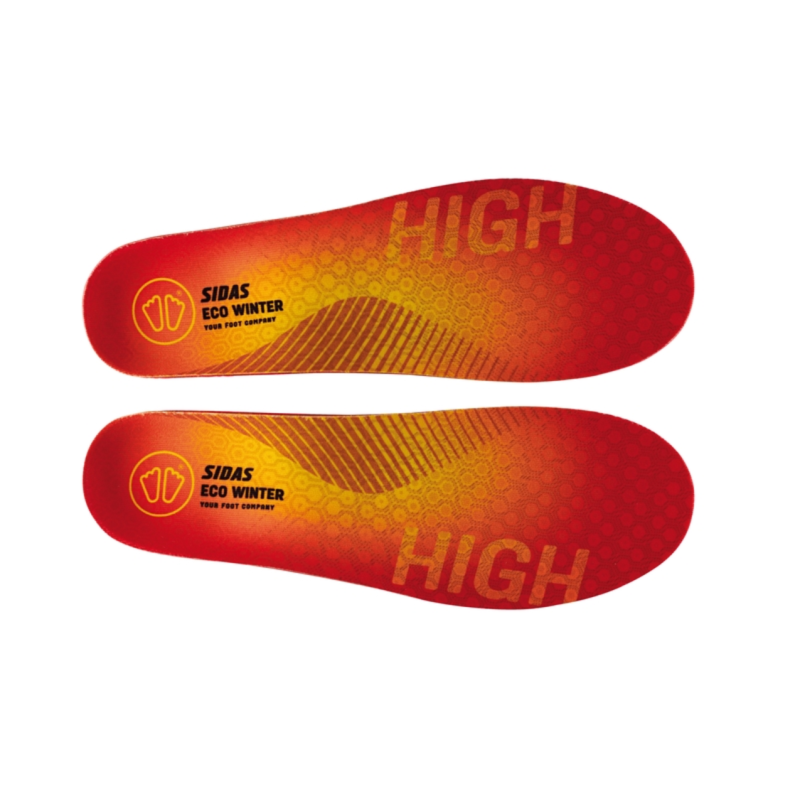
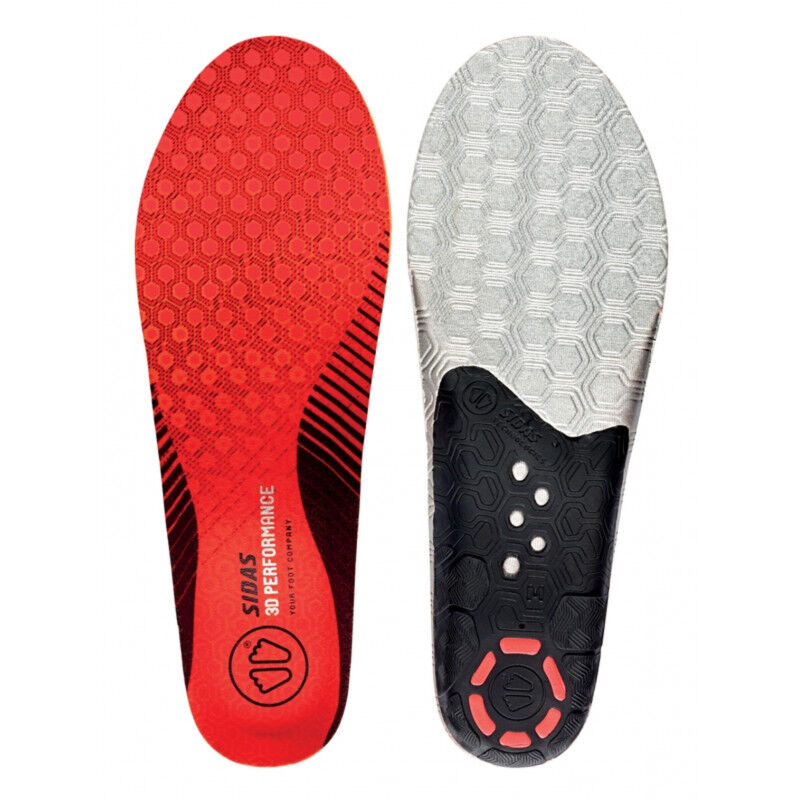
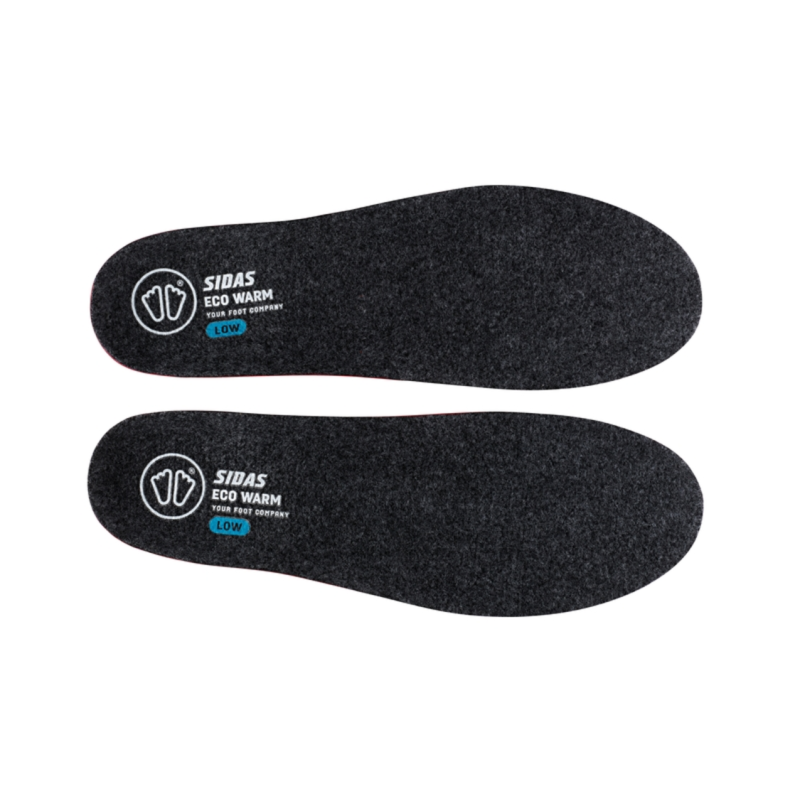
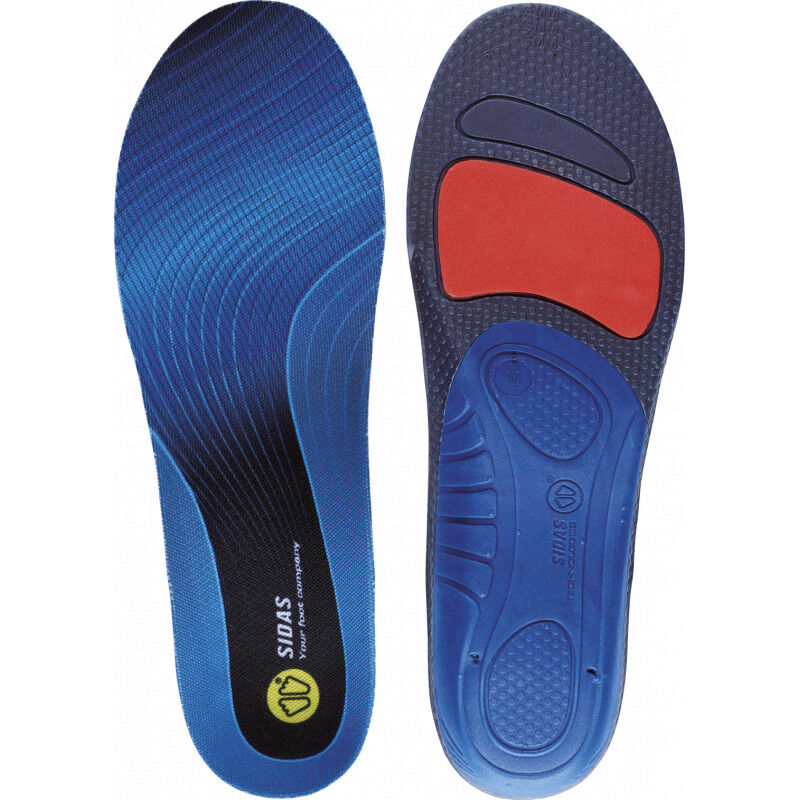
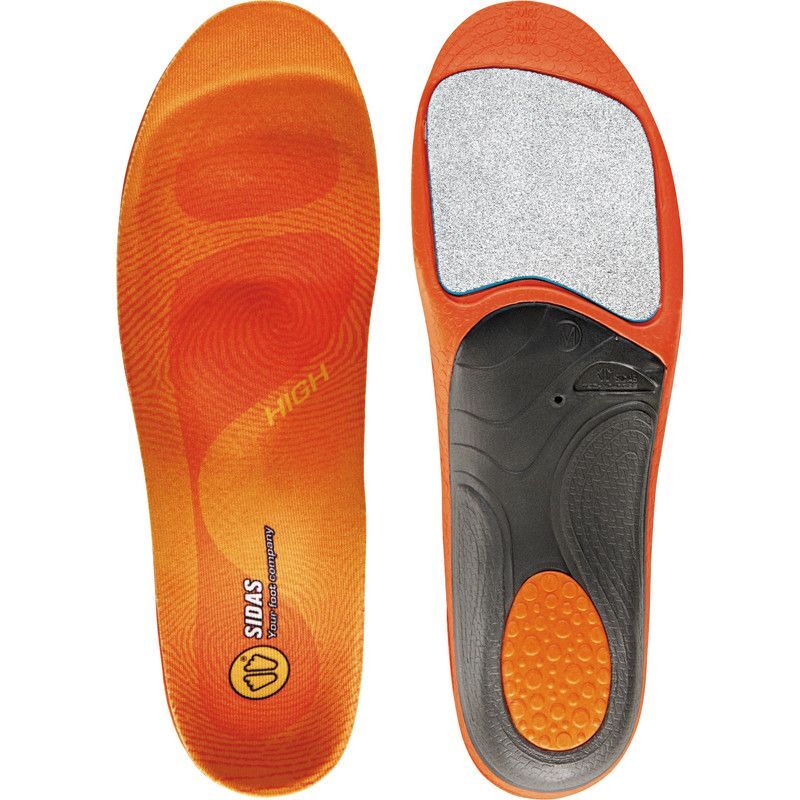
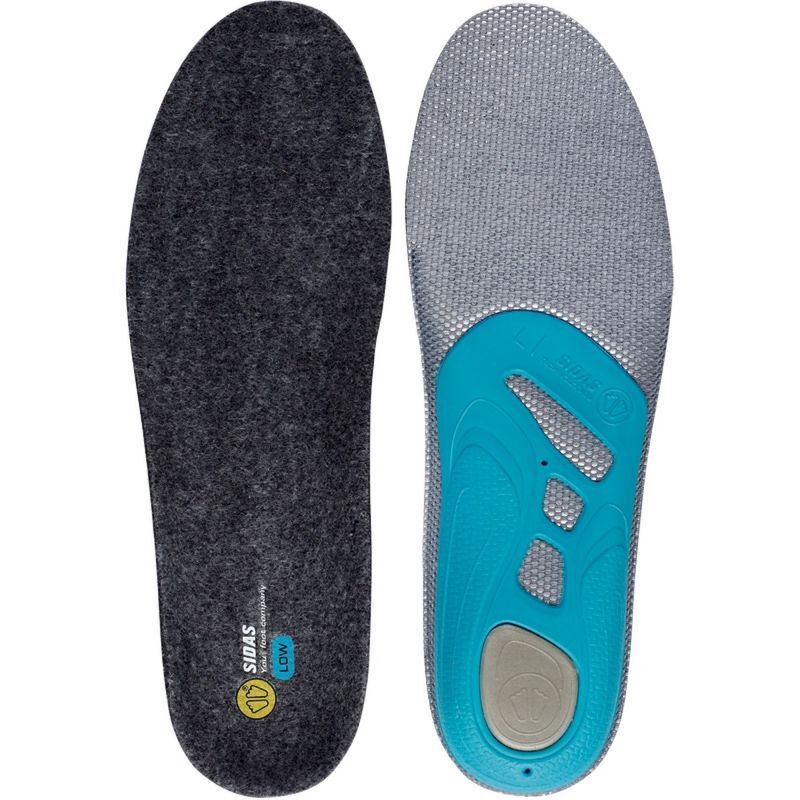
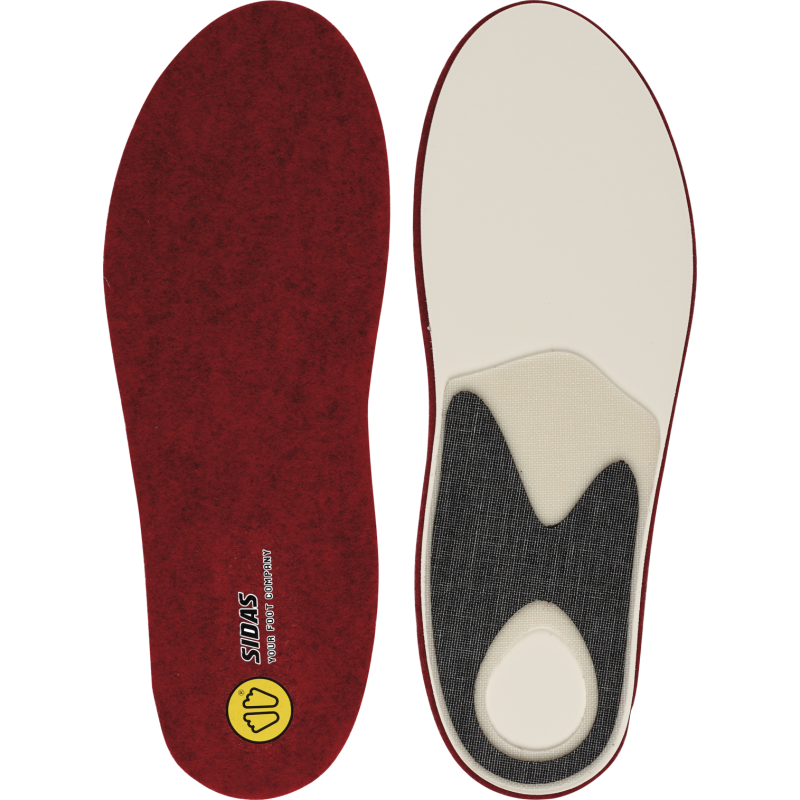
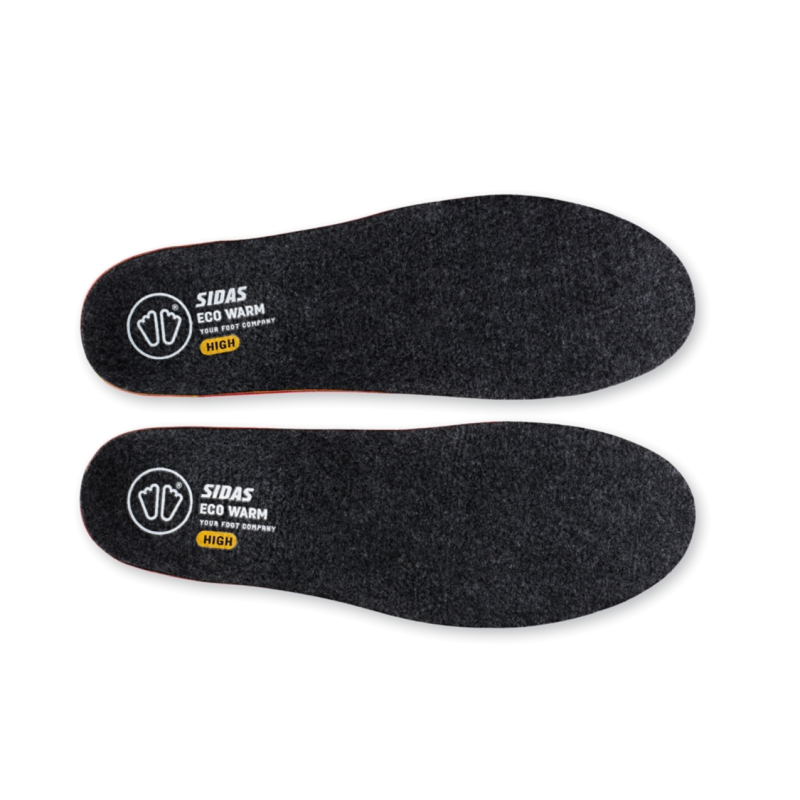
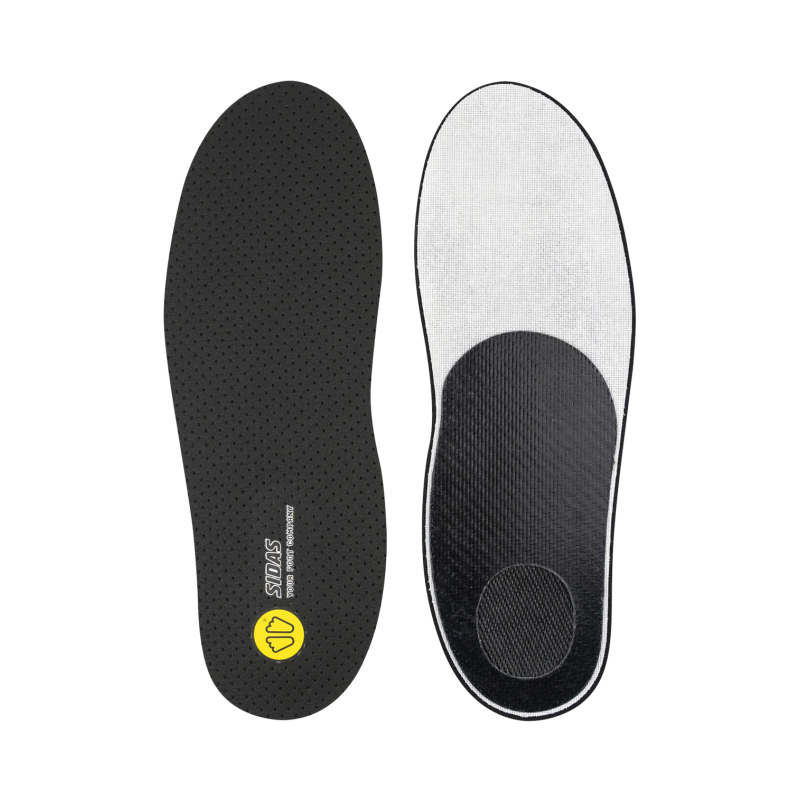
Let’s start with the liner of the ski boots. A key element of your comfort, the liner is removable and independent, just like a sole. You can thus remove and change it at your convenience. Beyond comfort, the liner of your ski boots protects against cold and moisture, keeping your feet warm. If you’ve ever skied with wet feet, you fully understand the importance of keeping your feet dry! You will find different types of liners on the market, but generally, the main types are those designed in a standard way and those that are “thermoformed”. Standard liners are developed by specific machines to fit the shape of your feet perfectly, while thermoformed liners, or those with memory foam, adapt to the shape of your feet for even more comfort.
Ski Boots: which shell to choose?
After the liner comes the shell of your ski boots. Anyone who has spent a day skiing with painful feet knows that a shell that is too tight can quickly become uncomfortable! All ski boots offer a different shell width, which corresponds more or less to the width of your own feet. Generally, each brand offers a width that is either narrow or wide: the brand LANGE is known for its narrow shells, while the brand HEAD, on the other hand, is known for its wide shells. As a reference, there are 3 categories of shells, namely:
-Shell less than 100 mm for narrow feet
-Shell between 100 and 102 mm for medium feet
-Shell greater than 102 mm for wide feet
Composed of two parts, the cuff and the collar, the shell of your ski boots is generally made of polyurethane or polyether. This is due to the need for your shell to be rigid enough to allow you to lean on your ski boots without deforming them, while remaining flexible enough to slightly deform without cracking in negative temperatures.
Ski Boots: the different types of buckles
After the comfort of your foot comes the tightening of your ski boots. The buckles, as you might guess, allow you to close and adjust the tightening of the shell. You can find between 1 to 4 buckles on your ski boots. Generally, ski boots are equipped with 4 buckles, which is recognized as ideal for precise tightening. Some ski boots with 3 buckles reduce hard points and offer a cable tightening system. Children’s boots, on the other hand, often have a single buckle, reinforced by a powerstrap.
Ski Boots: the strap, a fundamental component
Let’s talk about the strap (or power-strap)! Allowing you to reinforce the tightening of your ski boots, the strap complements the buckles. The strap helps to secure the shell of your ski boots, and should not be overlooked.
Ski Boots: the tongue
To finish with the components of your ski boots, let’s not forget to talk about the tongue, which allows you to press your tibial area against the front. The tongue prevents direct contact with the shell and friction on the tibia, thus adding extra comfort to your practice.
You now have in mind the different elements that make up ski boots. Let’s now focus on an important aspect of skiing, namely the flex index.
Ski Boots: the flex
What is the flex of a ski boot? It is simply the degree of stiffness of your ski boots. Generally, the stiffer your ski boots are, the higher the flex, and the more precision the skier will have. Conversely, ski boots with a low flex will be softer, thus providing less precision to the skier. You may be wondering how to know which flex to choose? It actually depends simply on your level and build. It is indeed important to choose a flex suitable for your practice, or you risk ending up with ski boots that are too technical or, conversely, not technical enough. Beyond your skiing level, also consider your physical condition. Stiff ski boots require significant commitment from the wearer, so it’s important to adapt to your capabilities to choose your ski boots wisely. Additionally, the flex of ski boots can be segmented into 3 categories based on skiing level.
Flex for beginners
For a beginner skier to intermediate, a soft flex, below 60, is ideal, as it offers low resistance to flexion and more easily accommodates positioning and support errors.
Flex for intermediate level
For an intermediate skier to advanced, a flex between 70 and 90 is highly recommended. Slightly stiffer, your ski boots will accept fewer mistakes and thus require a better skiing level.
Flex for advanced level
Finally, for expert skiers, a rigid flex above 100 resists flexion strongly, thus requiring great precision and responsiveness.
The fundamentals of ski boots are now acquired: you know which elements make up ski boots, and how to choose the level of flex of your ski boots according to your practice and level. One question remains at this stage: how to find the right size for your ski boots? To enjoy wonderful hours on the slopes and fully appreciate your brand new ski boots, some tips are in order to choose the perfect size.
Ski Boots: overview of size and Mondopoint
First of all, to choose your size well, it is important not to refer to the size you usually wear in your street shoes. Firstly, the correspondences change from one brand to another. Secondly, your foot does not react the same way to cold and effort and thus requires concrete size measurements! Two factors must therefore be identified to find the ideal size:
-the width of your feet: as we have seen, there are 3 types of widths, namely 100 mm for a narrow foot, 102 mm for a medium foot, and nearly 104 mm for a wide foot
-the length of your feet: this is where the Mondopoint measurement comes into play, which you will find on all ski boots, which actually corresponds to the length of your feet in centimeters
To measure your feet, nothing complicated! Print a foot measuring tool and place it on the ground against a wall. Place one of your feet on the foot measuring tool, and lean against the wall so that your heels are pressed against the wall. Finally, identify the measurement that corresponds to your feet. Be careful not to aim for the size above: in skiing, a size that is too large can lead to injuries!
Your ski boots hold no secrets for you! But each practice requires some adjustments, which are important to know before choosing your ski boots. We therefore offer to guide you through the different practices to help you more precisely in your search.
Women's ski boots
Ski Boots according to practice
Ski boots for alpine skiing
Widely practiced, alpine skiing can suit both beginners and experts alike. Thus, the choice of your ski boots will depend on your level in the practice, since depending on this, the type of slope will not be the same. As we saw earlier, the higher your level, the higher the flex will be.
Alpine ski boots
Ski boots for competition
Ski boots designed for competition must allow the skier to carve perfect turns. Precision and commitment are essential here, which is why a very forward-leaning cuff is required to promote the tibia's support on the tongue. Particularly rigid, ski boots for competition are equipped with 4 buckles and a strap, and are very narrow (between 99 and 100 mm) to facilitate energy transfer between the feet and the skis.
Ski boots for ski touring
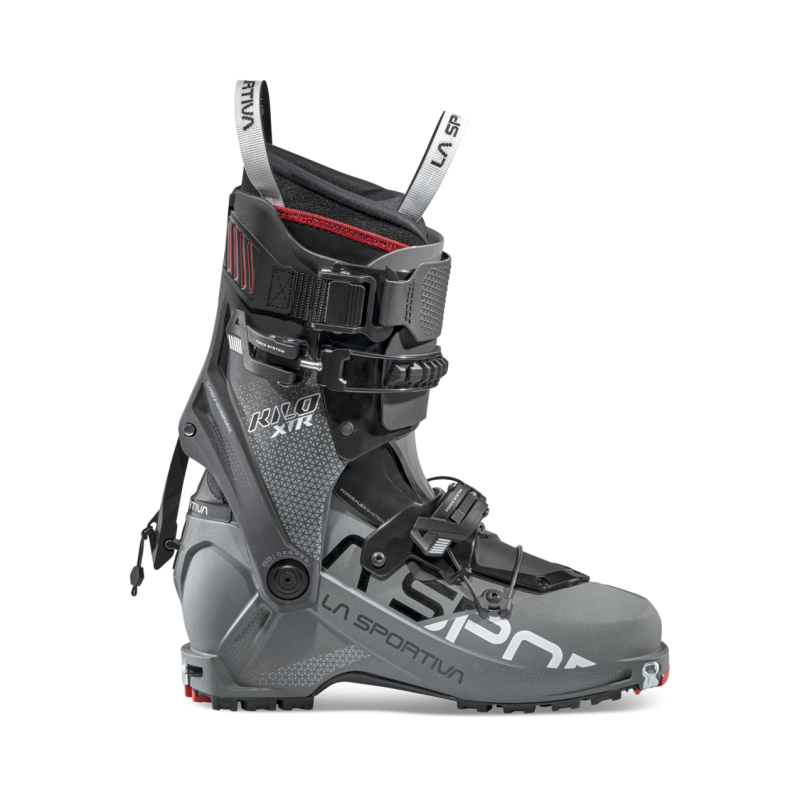
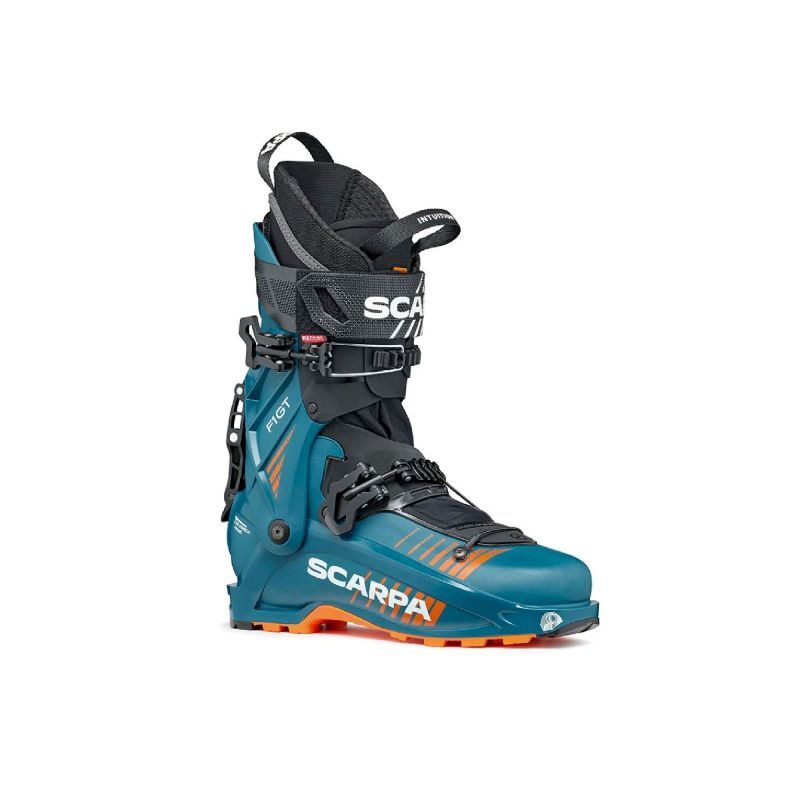
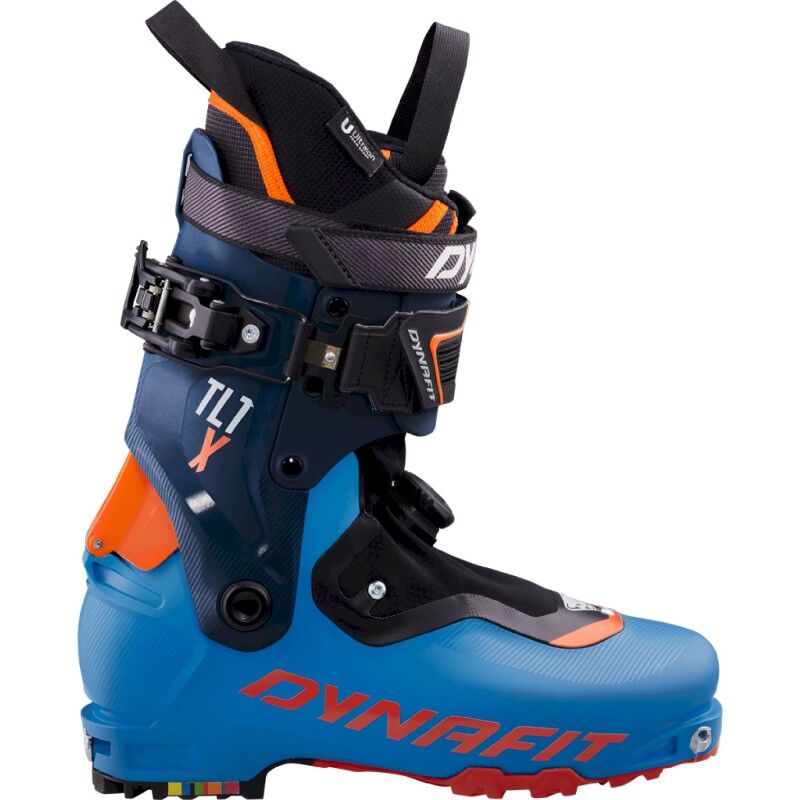
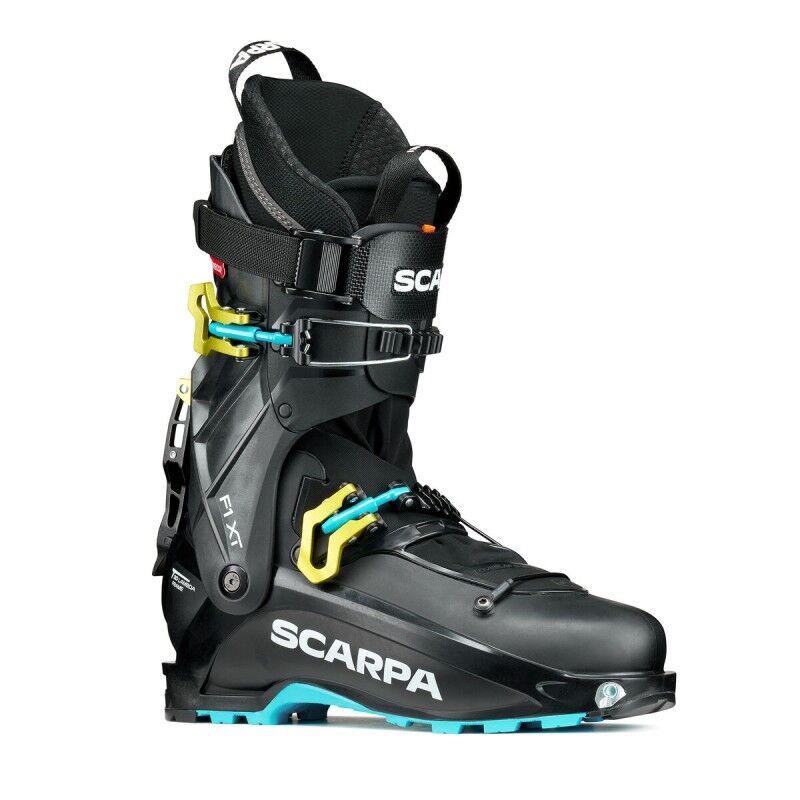
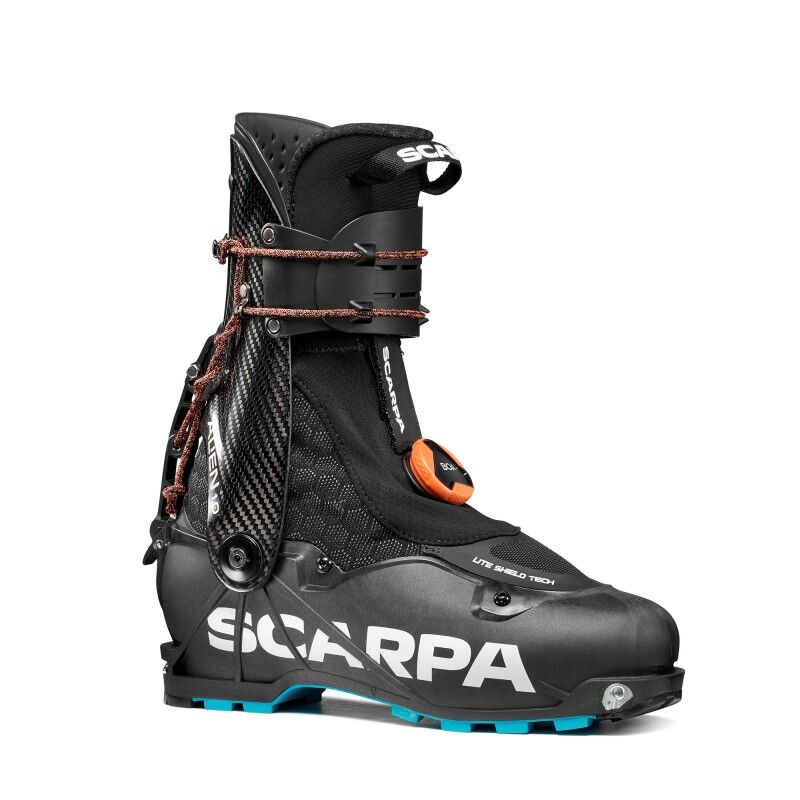
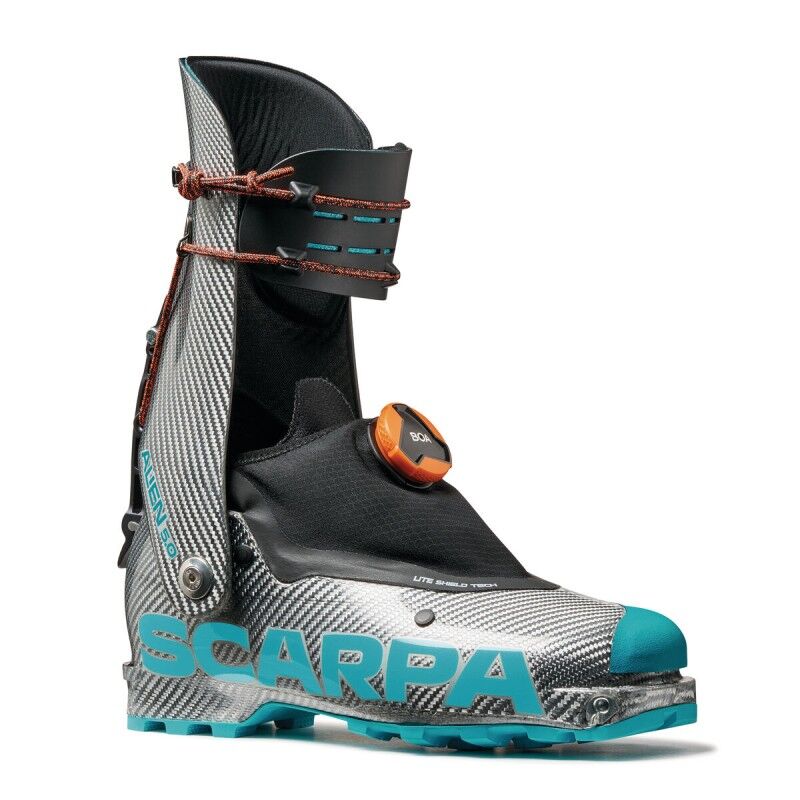
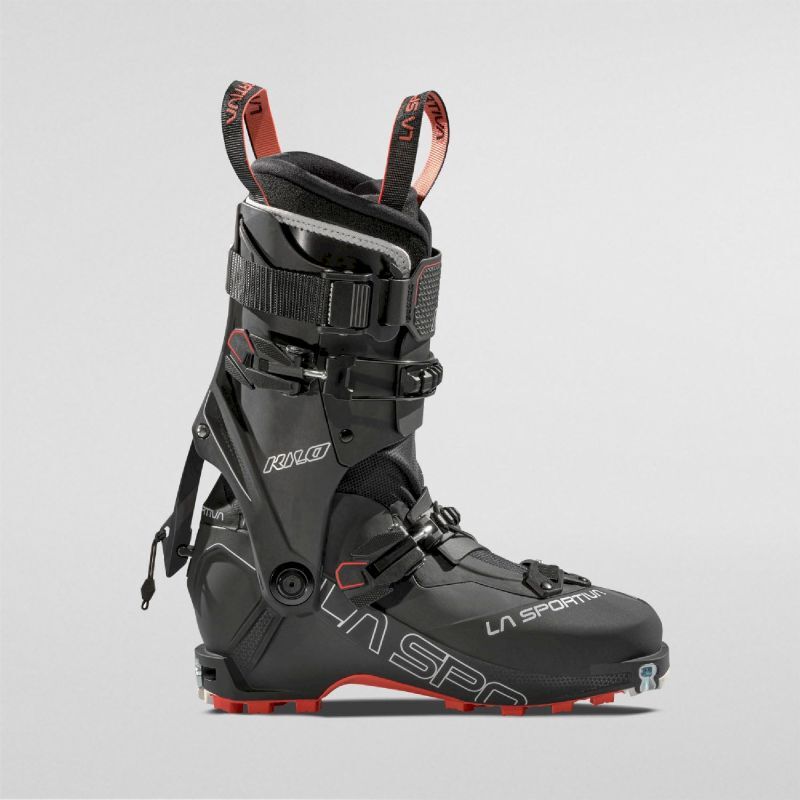
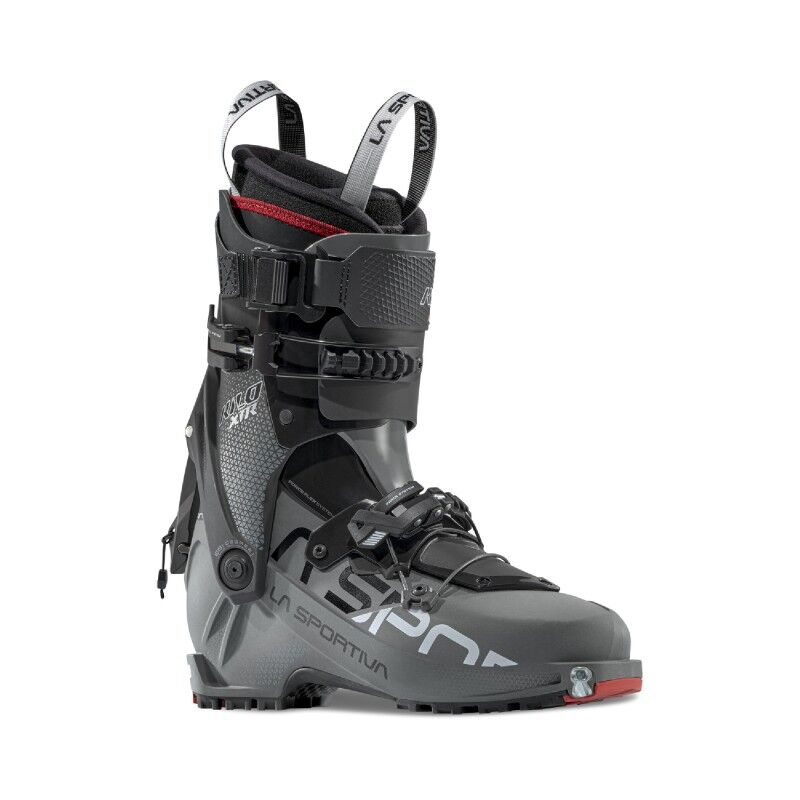
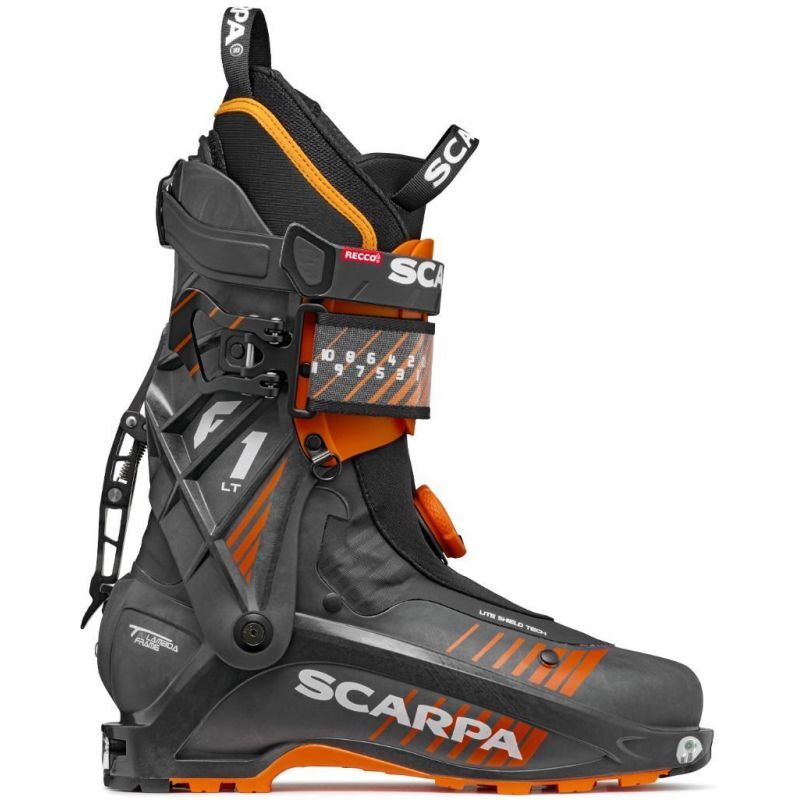
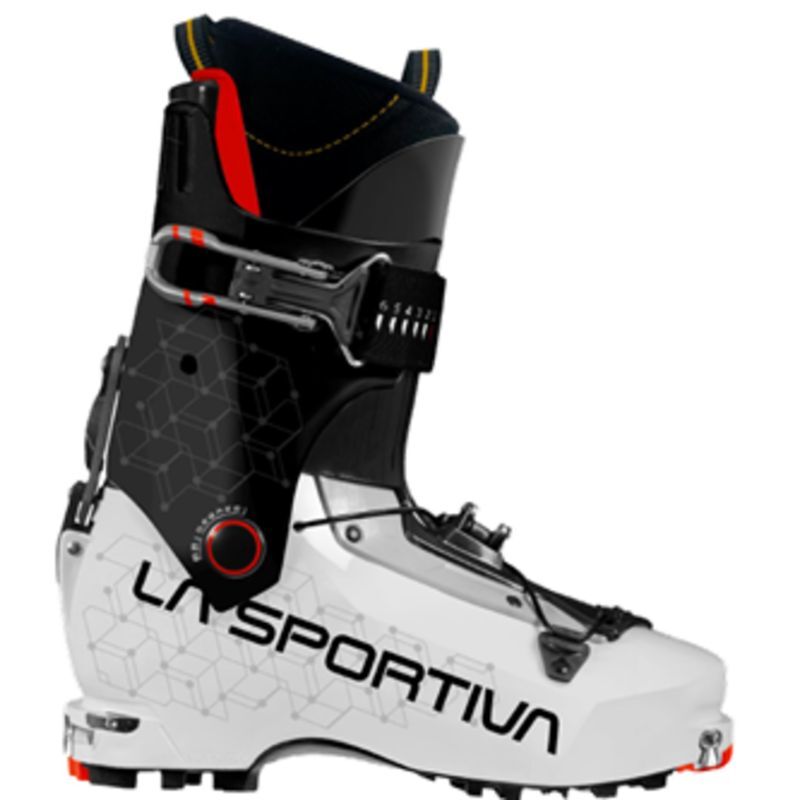
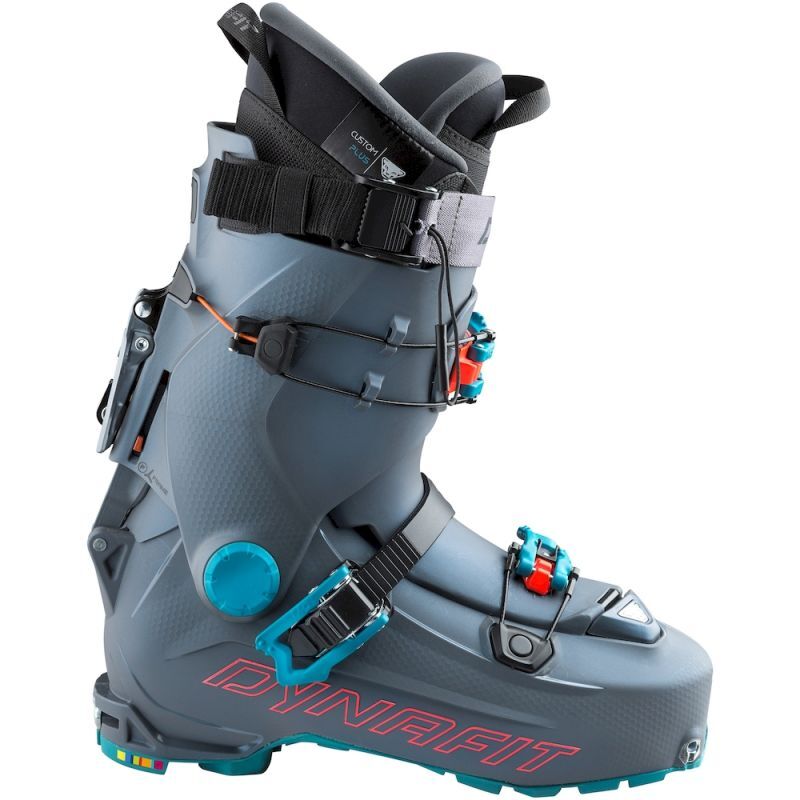
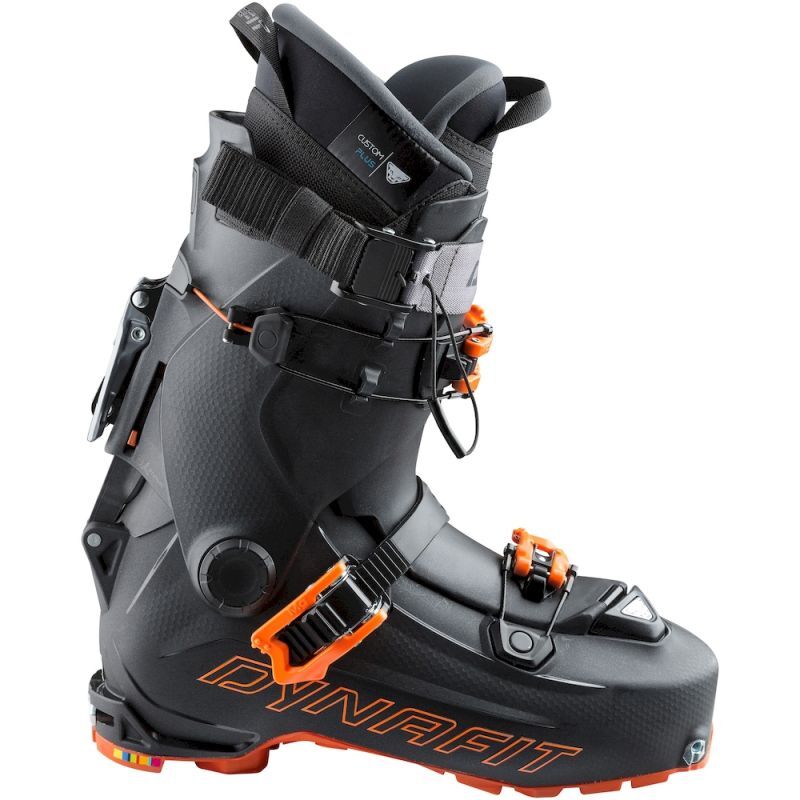
In vogue in recent years, ski touring has seen the emergence of true technological gems! Light enough not to hinder progress on steep slopes and equipped with a releasable collar, ski touring boots have two inserts on the sides, necessary to be compatible with ski touring bindings. Also, in ski touring, it is necessary to choose the range of motion well, which actually allows the calf to be released when climbing and to lock the boot when descending. We recommend a range of motion of around 55°, which will allow for a natural and comfortable ascent. The flex, on the other hand, should be around 100.
Ski boots for freeride
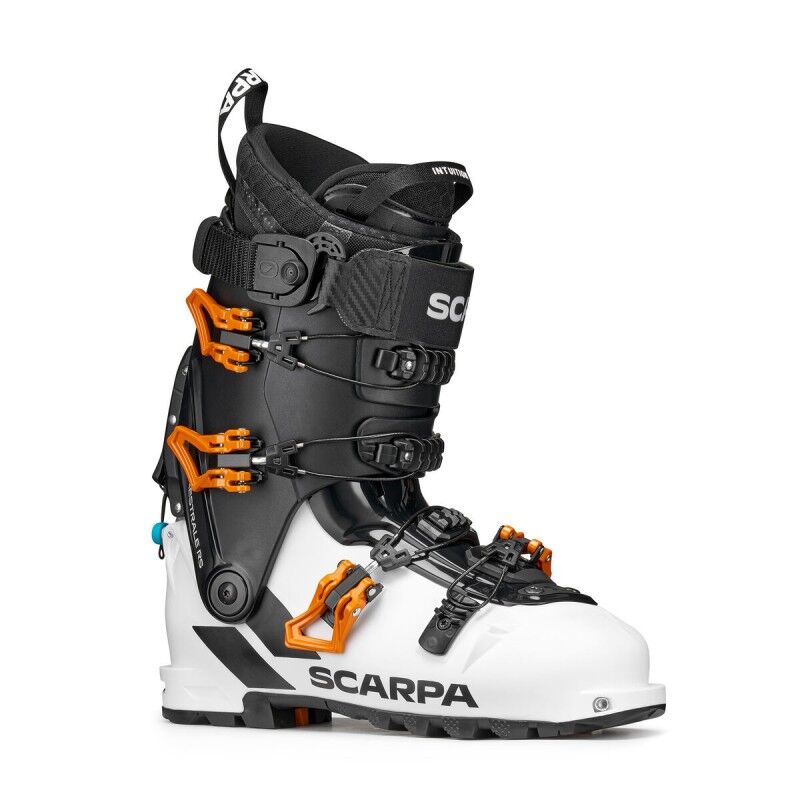
Requiring high-end qualities, ski boots for freeride have a collar angled forward and shock-absorbing zones, designed to withstand the impacts of your jumps in particular. The powder encountered requires a high flex, and a releasable collar in general, to ensure maximum precision. Often equipped with non-slip zones, ski boots for freeride allow you to walk on snow with your skis on your back to reach snowy passes and ridges.
Freeride ski boots
Ski boots for All Mountain
With a specific ski range, the All Mountain practice lives up to its name, as it caters to versatile skiers, transitioning from piste to off-piste in the same day. Ski boots for All Mountain require comfort and precision, so they are generally quite rigid, with a flex ranging from 80 to 130. The collar is generally slightly inclined, and they have between 3 to 4 buckles.
All Mountain ski boots
Ski boots for freestyle
Last on the list, freestyle skiing calls for ski boots with a straight collar, allowing for a neutral inclination. The flex is around 110, and shock-absorbing zones are present under the foot to cushion the impacts of your repeated jumps.
Each practice has its own requirements, and each has its own ski boots! For high-flying ski enthusiasts, it is important not to forget to consider the soles when choosing your ski boots.
Ski Boots: what about the soles?
Not all boots fit all bindings! Specifically, ski boots with a smooth toe work with alpine bindings. Conversely, boots with a tread do not work with this type of bindings. However, know that for ski boots of the All Mountain and piste types, the Gripwalk standard ensures compatibility of your boots with your piste and All Mountain bindings.
Once all these specifics are well taken into account, let’s move on to the most exciting phase: trying on your ski boots! A few good practices should be applied to find the ideal pair.
Ski Boots: the right reflexes during the fitting phase
A few rules should be followed when trying on your future ski companions! First, never forget to try your boots on with your ski socks. This will prevent you from choosing the wrong size and from struggling to put your foot in the boot on the big day once your socks are on! Once you’ve slipped your feet into the ski boots, be sure to close the buckles on the first or second notch. If your foot floats once this tightening is set, it means your ski boots are far too big! If your foot is well secured, stand up straight and check that your toes barely touch the liner and touch the end of the shell. If not, again, you need to change models! Finally, perform a few flexion exercises. For this, lean heavily on your shins to check that in this position, your toes no longer touch the front of your boots. Do a few pivots to ensure that your heel does not lift during this maneuver. Then, move your toes in your ski boots: if this is not possible, then the model is too small.
Also, know that a liner loses about 30% of its initial volume after just a few weeks of use: it is therefore crucial not to be too comfortable during your fittings, as this could turn into a disadvantage on the slopes! If you feel any discomfort during your fittings, move on to another pair of ski boots. Your little discomforts will indeed be amplified once in the heat of action, and you might regret your choice! Now that your ski boots fit like a glove and you have found the ideal pair, it is important to take care of them to ensure many comfortable ski sessions.
Ski Boots: how to maintain them well?
If you are one of those people who forgot to close their ski boots after your session and can no longer close your ski boots the next day, then this will greatly interest you! Thus, after each day of skiing, remember to remove the liners from the shells to let them dry and preserve them as best as possible. Also, don’t forget to close the buckles after each day of skiing, which will prevent the plastic from deforming and thus prevent you from closing them the next day. Finally, store your ski boots in a dry and cool place, away from any heat source. Moreover, if you walk a lot with your ski boots, remember to change the wear parts located at the front and back of the sole, which can hinder the proper functioning of the binding.
Find your ski boots on Hardloop.co.uk
The powder season is coming, and you are now finely informed about ski boots: all that’s left is to choose the model that suits you and your practice! If any doubts or questions prevent you from finding the ideal pair, do not hesitate to let us know at 01 48 58 30 28 (free call) or by email at hello@hardloop.fr. We will be more than happy to assist you!